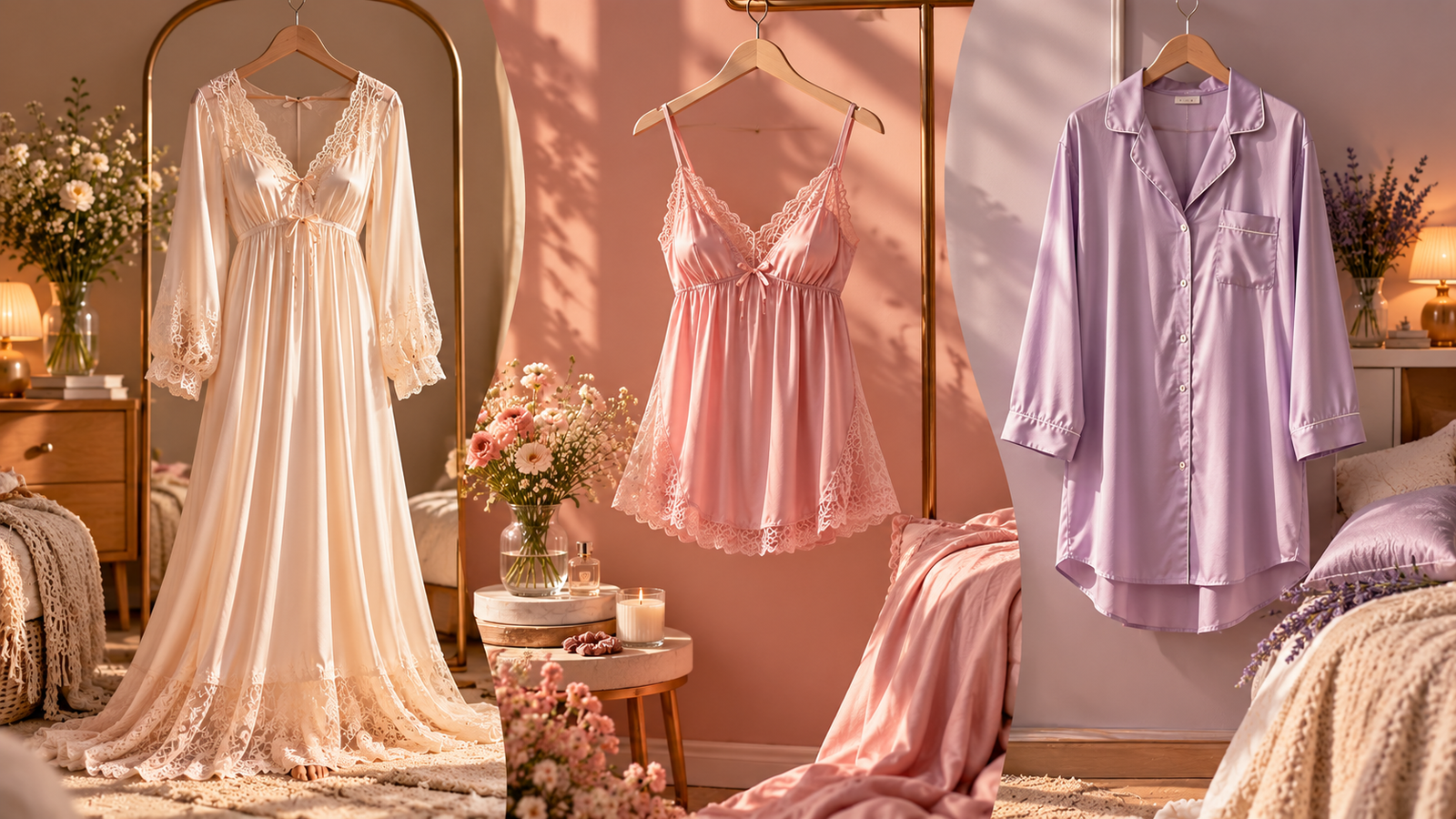
The terms nightgown, nightie, and nightshirt in “Intimate Garment” often describe very similar sleepwear, which makes the differences easy to miss. In everyday use, the boundaries aren’t always strict, and regional vocabulary can change what people call the same garment.
A nightgown is generally a loose, dress-like garment worn to bed. A nightie is usually an informal name for a nightgown or nightdress, while a nightshirt has a more shirt-like shape and typically falls to the thighs, knees, or below.
So, when comparing nightgown vs nightie vs nightshirt, the biggest differences usually come down to shape, terminology, length, styling, and regional usage rather than three completely separate categories.
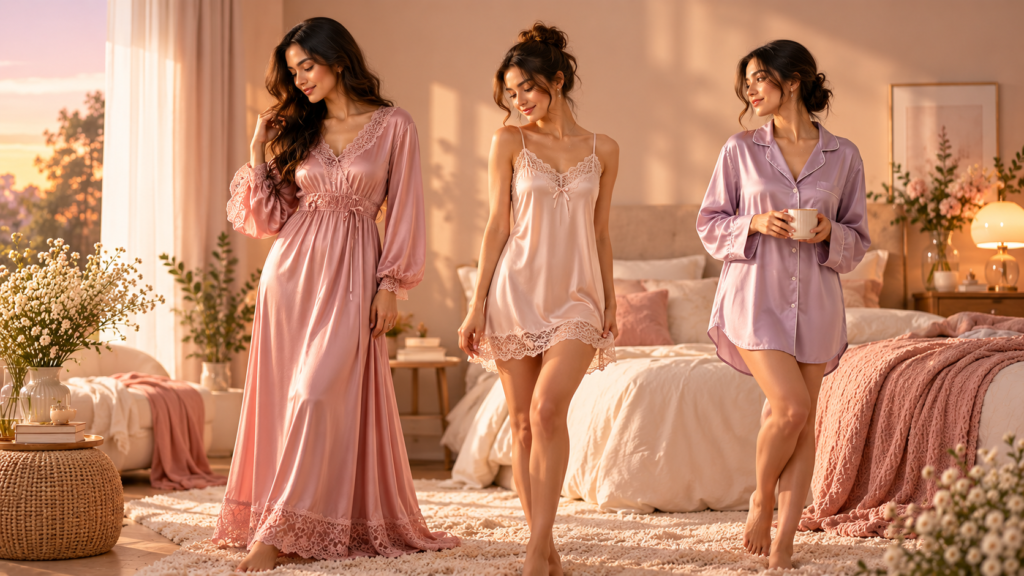
Nightgown vs Nightie vs Nightshirt at a Glance
| Feature | Nightgown | Nightie | Nightshirt |
|---|---|---|---|
| Basic shape | Usually loose and dress-like | Usually similar to a nightgown | Long, loose shirt-like garment |
| Common use | Sleeping and lounging | Sleeping and lounging | Sleeping and relaxing |
| Typical styling | Can range from simple to elegant | Casual, feminine, or decorative | More relaxed and shirt-inspired |
| Length | Short to floor length | Short to long | Often thigh-, knee-, or longer length |
| Terminology | Common term, especially in the US | Informal term | Distinct garment term |
| Regional usage | Often called a nightdress in the UK | Common informal term in British English | Traditionally associated with a shirt-like sleep garment |
The terminology overlaps considerably. Cambridge Dictionary defines nightie as an informal term for nightdress or nightgown, while it describes a nightshirt as a long, loose shirt worn in bed.
That means you shouldn’t assume that every retailer or shopper uses these words in exactly the same way.
What Is a Nightgown?
A nightgown is a loose garment designed for sleeping. Its overall silhouette resembles a dress rather than a traditional shirt, although the actual design can vary widely.
Nightgowns can have:
- Spaghetti straps
- Short or long sleeves
- V-necks
- Scoop necklines
- Button fronts
- Lace trim
- Side slits
- Loose or flowing silhouettes
- Short, mid, or long lengths
Cambridge describes a nightgown as a comfortable, loose dress-like garment worn in bed, while Collins similarly defines it as a loose gown worn by women or girls in bed.
The term therefore describes the general garment category, not one specific cut.
What Does a Nightgown Look Like?
Picture a loose sleep dress that falls from the shoulders without separate pants. That basic silhouette covers a surprisingly wide range of designs.
A simple cotton nightgown might look more like a relaxed house dress. A satin version can have a much more polished appearance, while a modal nightgown can prioritize softness and stretch.

For example, the CHICME lace-trim modal sleep dress uses a flowy silhouette, adjustable spaghetti straps, and soft stretch fabric. It fits the broader nightgown category while adding decorative details that make the garment more styled than a basic sleep shirt.
What Is a Nightie?
A nightie is usually not a completely different type of garment from a nightgown.
It is an informal term for a nightgown or nightdress. Cambridge defines nightie as an informal word for nightdress or nightgown, and Collins likewise describes it as a loose dress worn in bed.
This means someone may call a garment a nightgown while someone else calls the same garment a nightie.
The word often has a more casual, familiar tone. In British English, nightie is especially associated with nightdress, while nightgown is more common in American English.
Is a Nightie the Same as a Nightgown?
Usually, yes.
In everyday clothing terminology, a nightie can simply mean a nightgown or nightdress. The distinction often comes down to word choice rather than garment construction.
A retailer might call a short, loose sleep dress a nightie, while another might list a similar design as a nightgown or nightdress.
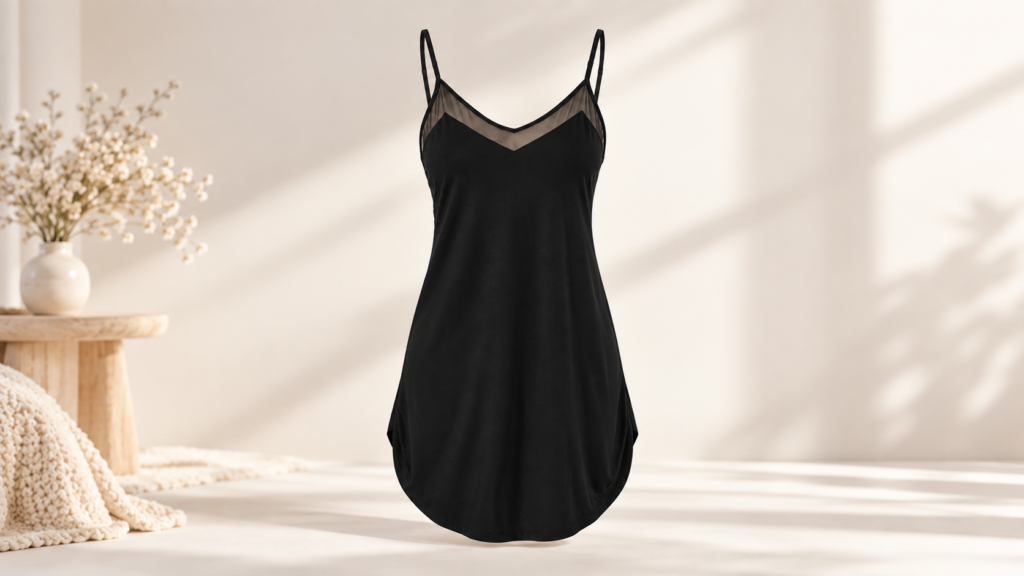
The Ekouaer bamboo viscose nightgown is a good example of this overlap. Its product description uses several related terms, including nightgown, night dress, chemise, and sleepshirt. That illustrates why online shopping terminology can feel inconsistent.
What Is a Nightshirt?
A nightshirt has a more distinctly shirt-like construction.
Cambridge defines it as a comfortable, long, loose shirt worn in bed, while Collins describes it as a long, loose-fitting shirt-like garment for sleeping.
Traditional nightshirts tend to have:
- A loose torso
- A shirt-inspired neckline
- Longer sleeves or short sleeves
- A straight or relaxed silhouette
- A longer hem than an ordinary daytime shirt
Modern versions can look very different from historical nightshirts. Some are oversized cotton shirts, while others resemble long sleep tees.
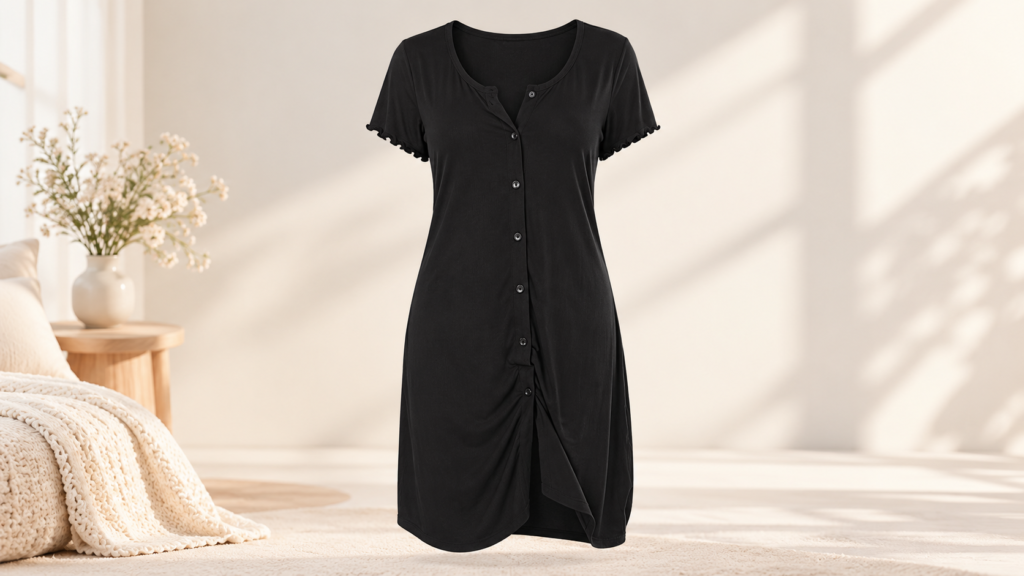
The Ekouaer button-down nightgown/sleepshirt sits close to this boundary. Its button-front design and shirt-like construction make it useful for readers looking specifically for a more relaxed nightshirt-style option.
Nightgown vs Nightie: What’s the Difference?
For most shoppers, there may be little or no physical difference between a nightgown and a nightie.
The distinction is mainly linguistic.
| Term | What it usually means |
|---|---|
| Nightgown | A loose dress-like garment worn to bed |
| Nightie | Informal term for a nightgown or nightdress |
| Nightdress | Common British term for a nightgown |
| Nightshirt | A loose, shirt-like sleep garment |
So if you’re searching for a nightie, you can usually browse nightgowns and nightdresses as well.
The important detail is to look at the actual garment description, fabric, length, neckline, and fit, rather than relying only on the product name.
Nightgown vs Nightshirt: What’s the Difference?
The easiest way to separate these two is dress-like versus shirt-like construction.
A nightgown usually flows from the shoulders and has a silhouette closer to a dress. A nightshirt tends to resemble an oversized shirt that has been lengthened for sleeping.
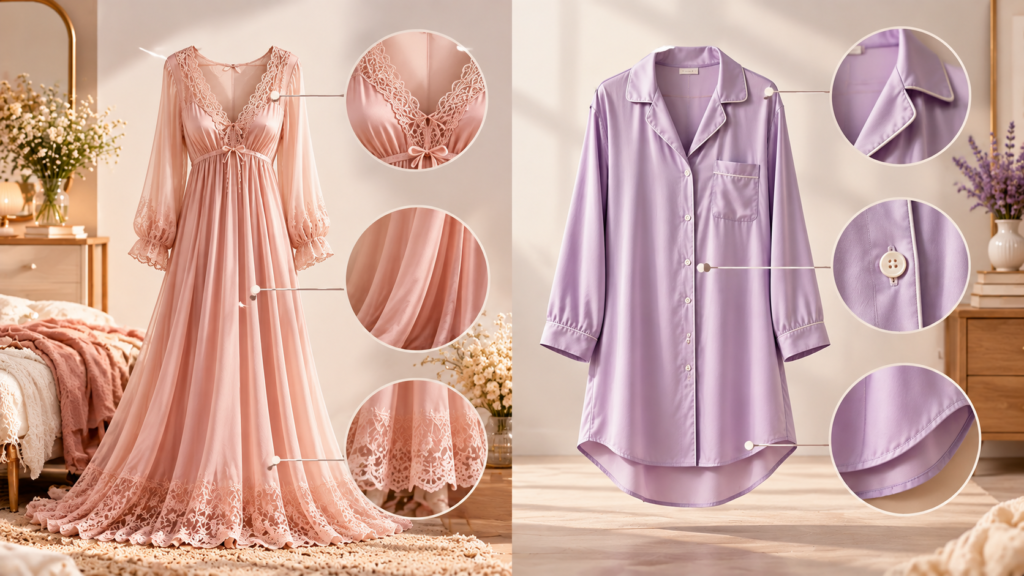
The difference becomes particularly obvious when you compare construction.
Nightgown
- More dress-like silhouette
- Often available in flowing cuts
- Can range from very simple to decorative
- Commonly made with cotton, modal, satin, silk, or similar fabrics
- Often designed specifically around feminine sleepwear silhouettes
Nightshirt
- Shirt-like silhouette
- Often straighter and looser
- May include a collar or button placket
- Often associated with oversized or relaxed styling
- Can work as sleepwear and casual loungewear
Nightie vs Nightshirt: What’s the Difference?
This comparison gets confusing because nightie refers primarily to naming, while nightshirt describes a particular garment shape.
A nightie generally refers to a nightgown or nightdress. A nightshirt refers to a longer shirt-like garment.
For example, a short lace sleep dress may be called a nightie, while an oversized cotton button-down sleep top may be called a nightshirt.
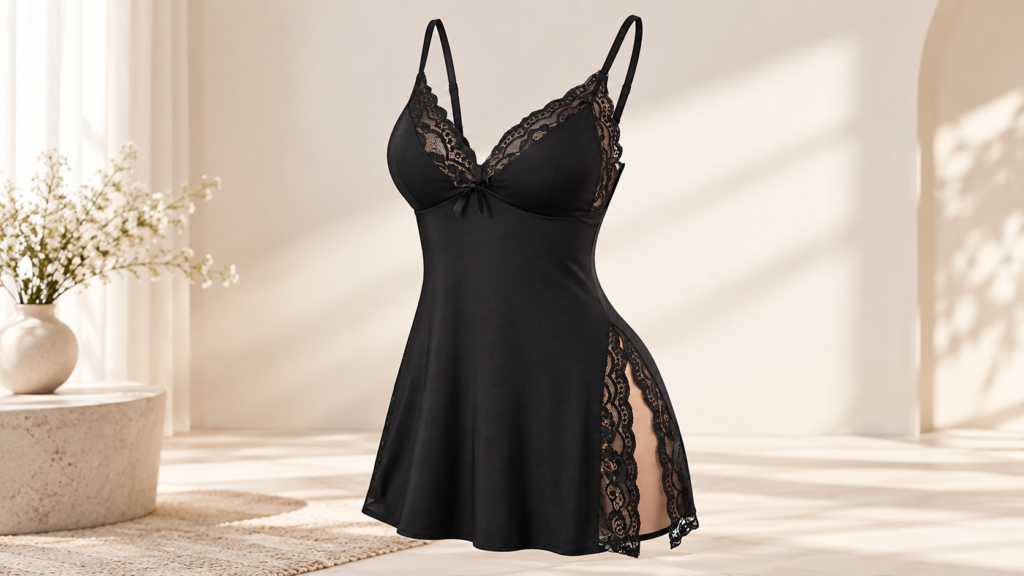
The Avidlove cotton nightgown/babydoll-style sleep dress demonstrates how retailers can combine several sleepwear terms in one product description. It is described using terms such as nightgown, nightwear, nighty, and chemise.
Do Nightgowns and Nighties Have to Be Long?
No.
A nightgown or nightie can be short, mid-length, or long. The word describes the type of sleepwear more than one fixed hem length.
You can find:
- Short sleep dresses
- Knee-length styles
- Midi-length designs
- Ankle-length nightgowns
- Floor-length styles
Length should therefore be treated as a design choice, not a strict definition.
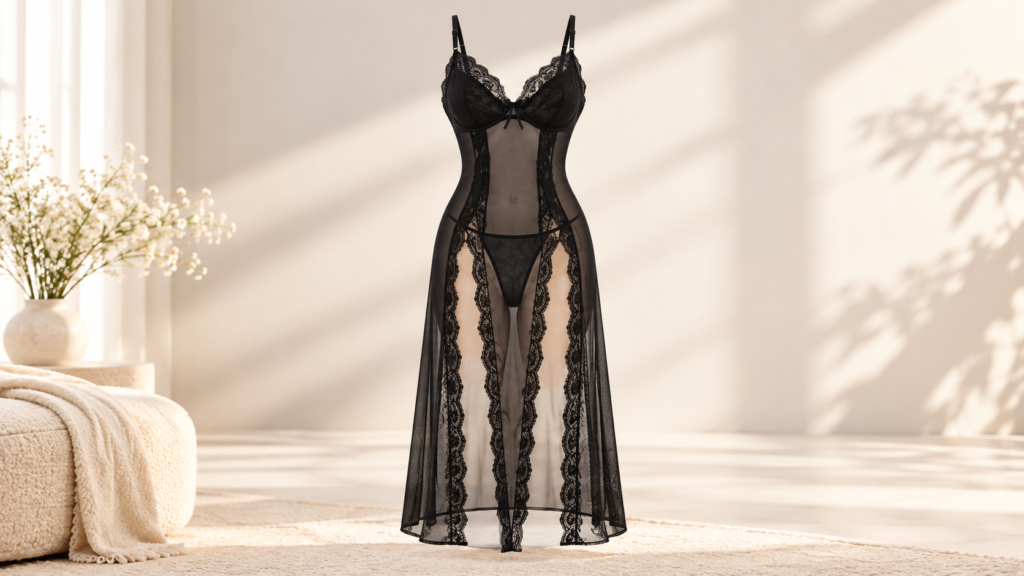
If you sleep hot, a short or lightweight design may feel less restrictive. If you prefer more coverage, a longer nightgown can provide it without switching to two-piece pajamas.
Are Nightgowns More Comfortable Than Nightshirts?
Neither garment is automatically more comfortable.
Comfort depends on factors such as:
- Fabric
- Fit
- Temperature
- Length
- Seam placement
- Waistband pressure
- Neckline
- Sleeve design
- Personal sleeping habits
Someone who dislikes waistbands may prefer a loose nightgown because it leaves the legs and waist unrestricted. Another person may prefer a nightshirt because its oversized shape feels more casual.
The better choice is the garment that gives you enough room to move without excessive fabric twisting, bunching, or overheating.
Which Fabrics Work Well for Nightgowns and Nighties?
Fabric changes how a garment feels against the skin and how it behaves during sleep.
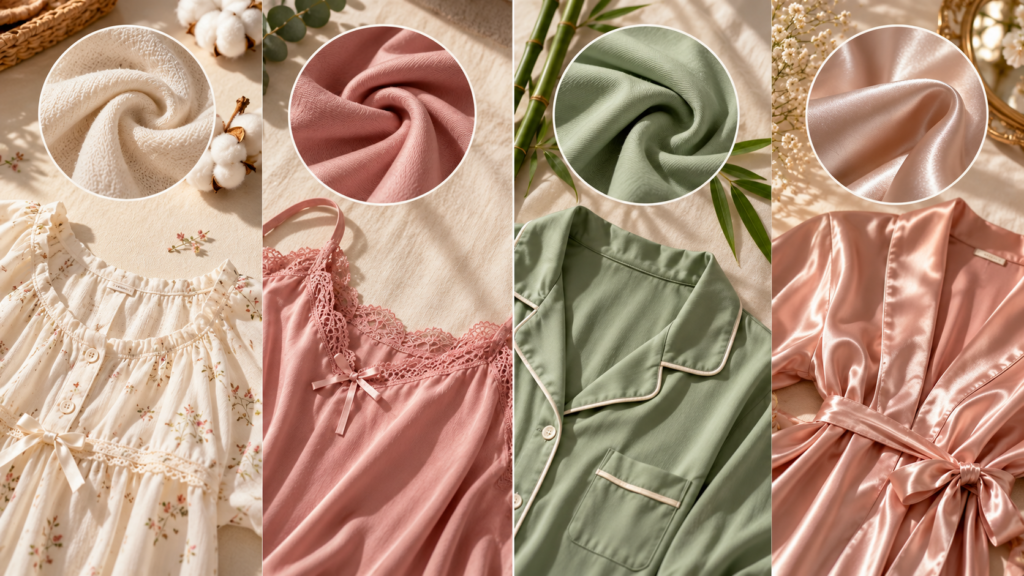
Cotton
Cotton is a familiar choice for everyday sleepwear. It can work well for people who prefer a natural-fiber feel and straightforward care.
Modal
Modal can provide a soft, smooth hand feel and is commonly used in lightweight sleepwear. The CHICME modal sleep dress and several modern nightgown designs demonstrate how modal works well with flowing silhouettes.
Bamboo Viscose
Bamboo-derived viscose appears frequently in lightweight sleepwear marketed for softness and warm-weather use. Product descriptions should be checked carefully because “bamboo” can refer to a fiber that has undergone significant processing.
Satin
Satin describes a type of weave or surface construction rather than one single fiber. A satin nightgown can have a smooth, glossy appearance and a fluid drape.
Silk
Silk is a natural protein fiber with a smooth feel and distinctive drape. If you’re considering silk sleepwear, check the actual fiber content rather than assuming that a product described as “silky” contains silk.
Can a Nightie Be Sexy or Elegant?
Yes. “Nightie” describes the type of sleepwear, not a particular level of coverage or styling.
Nighties can range from simple cotton sleep dresses to lace-trimmed, satin, or decorative designs.
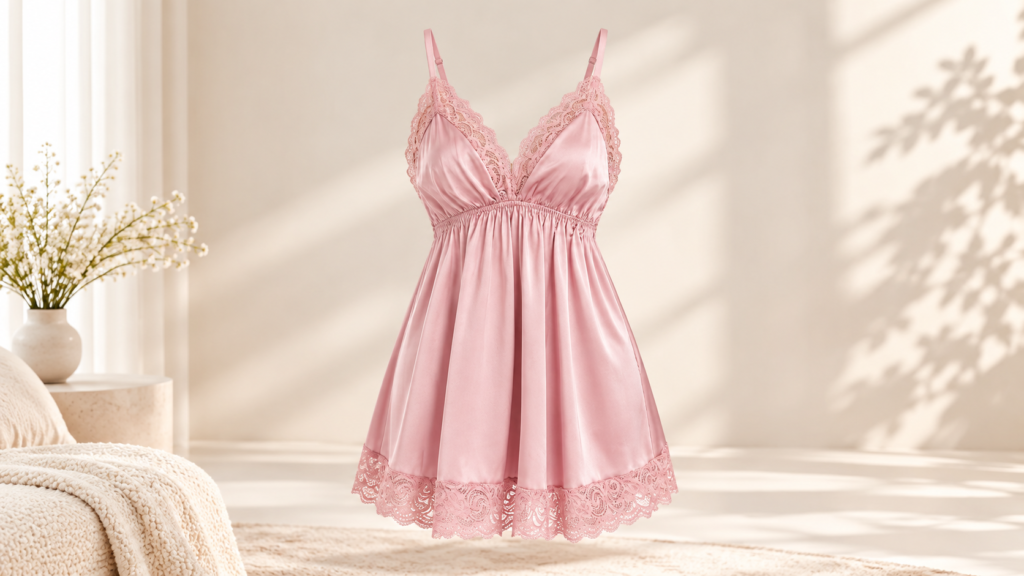
For example, the Avidlove lace babydoll chemise and Lilosy two-piece babydoll set represent more decorative interpretations of nightwear, while a plain cotton nightie can be designed entirely around everyday comfort.
How Do You Choose Between a Nightgown, Nightie, and Nightshirt?
Start with the way you prefer your sleepwear to feel rather than the name printed on the product page.
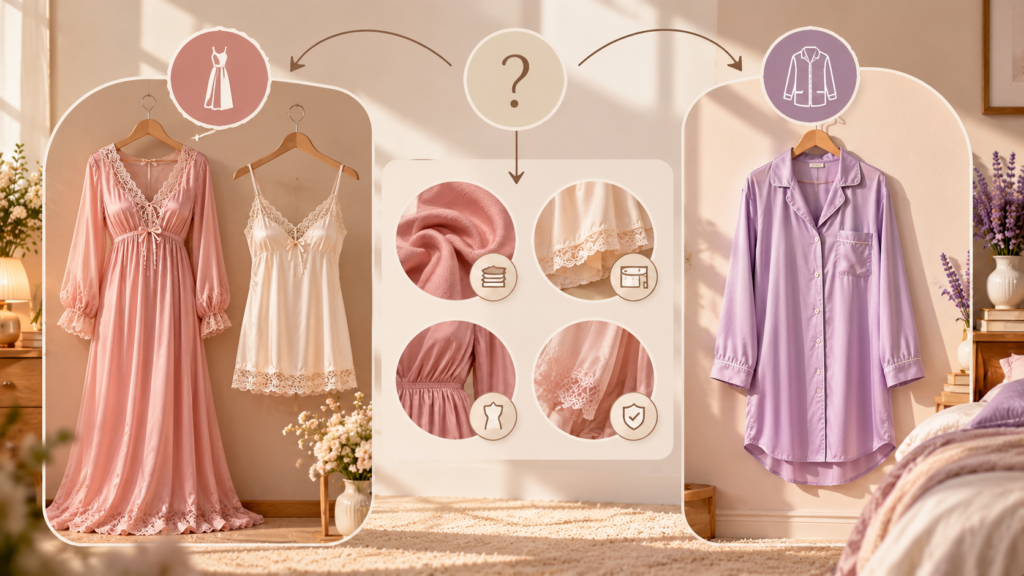
Choose a nightgown if you want:
- A dress-like silhouette
- A wide range of lengths
- Flowing fabric
- No separate waistband
- Traditional one-piece sleepwear
Choose a nightie if you want:
- A casual term for a nightgown or nightdress
- A one-piece sleep dress
- Shorter or more relaxed styles
- A feminine sleepwear silhouette
Choose a nightshirt if you want:
- A shirt-like shape
- An oversized fit
- Easy movement
- A button-front or shirt-style design
- A relaxed alternative to pajama sets
What Should You Look for When Buying One?
Once you know which silhouette you prefer, pay attention to the construction.
1. Check the fabric
Choose a fabric that suits your sleeping environment. Lightweight materials may work better in warm conditions, while brushed or heavier fabrics can provide more warmth.
2. Check the measurements
Don’t rely on the product name alone. Compare your measurements with the seller’s size chart, particularly when shopping online.
3. Look at the length
Consider whether the hem will feel comfortable when you turn in bed, walk around your home, or sit down.
4. Consider the neckline
A neckline that looks attractive in a product photo may still feel restrictive if you dislike fabric around your neck.
5. Look at closures and details
Buttons, straps, lace, seams, and decorative hardware can affect comfort. If you prefer minimal construction, a simple pull-on nightgown may work better.
6. Think about how you’ll use it
A sleep dress for hot summer nights has different requirements from a maternity nightgown, travel sleepwear, or a garment intended for lounging.
Are Nightgowns, Nighties, and Nightshirts the Same Thing?
Not exactly.
Nightgown and nightie often refer to the same basic type of garment, with nightie functioning as an informal term. Nightshirt is more distinct because it describes a shirt-like sleep garment.
Still, retailers sometimes use these words interchangeably. Product titles can combine terms such as nightgown, nightdress, nightie, nightshirt, chemise, and sleepshirt even when the garment clearly belongs to one broader category.
That’s why the product’s shape and construction tell you more than the name alone.
What Is the Difference Between a Nightgown, Nightie, and Nightshirt?
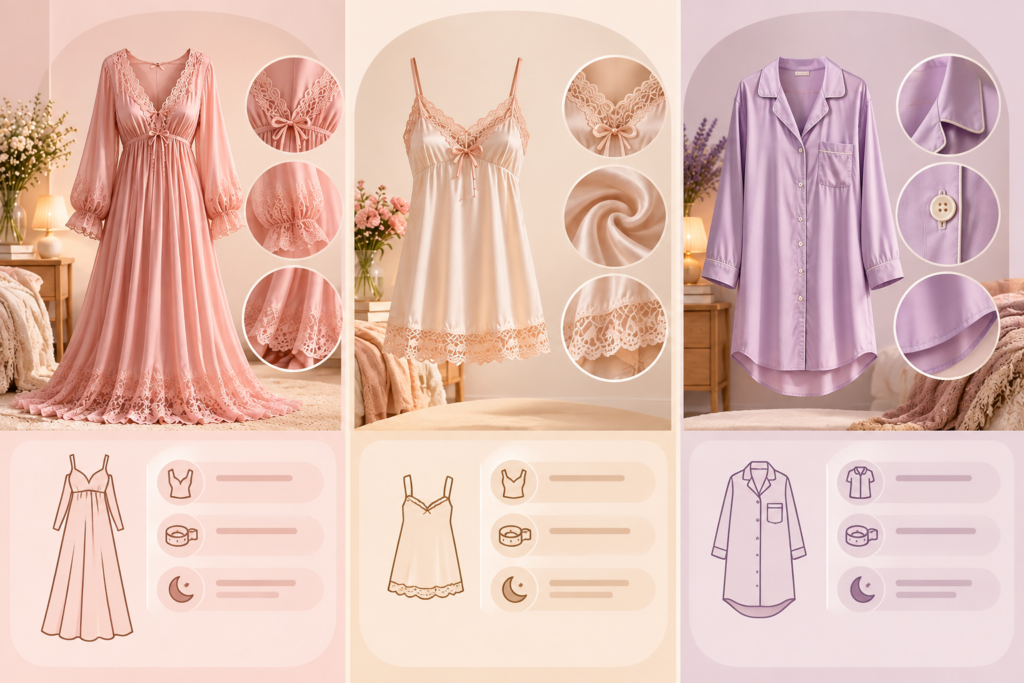
In simple terms:
- Nightgown: a loose, dress-like garment for sleeping.
- Nightie: an informal term commonly used for a nightgown or nightdress.
- Nightshirt: a long, loose, shirt-like garment worn for sleeping.
The terminology overlaps, particularly between nightgown and nightie. The most useful distinction is between dress-like sleepwear and shirt-like sleepwear.
Which One Will You Purchase Next?
When comparing nightgown vs nightie vs nightshirt, don’t get too caught up in the labels.
A nightie is usually another way of saying nightgown or nightdress. A nightshirt is the more distinct option, with a long, loose, shirt-like construction. Beyond those basic definitions, sleepwear comes in enough fabrics, lengths, fits, and designs that the right choice depends on how you sleep and what feels comfortable.
If you prefer a flowing one-piece silhouette, explore nightgowns and nighties. If you like an oversized shirt shape, a nightshirt may suit you better. Either way, check the fabric, measurements, length, and construction before buying.
Let us know how you feel about Nightie Wear Blogs. Feel Free to Reach Out to us – Contact Us.
Frequently Asked Questions
Is a nightie the same as a nightgown?
Usually, yes. Nightie is an informal term for a nightgown or nightdress. The exact terminology varies by region and retailer.
Is a nightshirt the same as a nightgown?
No, although the terms can overlap in retail descriptions. A nightshirt generally has a longer, looser, shirt-like shape, while a nightgown typically has a dress-like silhouette.
Is a nightie the same as a nightdress?
Generally, yes. In British English, nightdress is commonly used for a loose dress worn in bed, while nightie is an informal term for the same general type of garment.
Can a nightgown be short?
Yes. Nightgowns can be short, knee-length, midi-length, or long. There is no single required hem length.
What is another name for a nightgown?
Depending on the region and context, a nightgown may also be called a nightdress or nightie.
What is a nightshirt usually made from?
Nightshirts can be made from cotton, flannel, jersey, modal, and other sleepwear fabrics. The best choice depends on the desired warmth, softness, breathability, and fit.
Leave a Reply