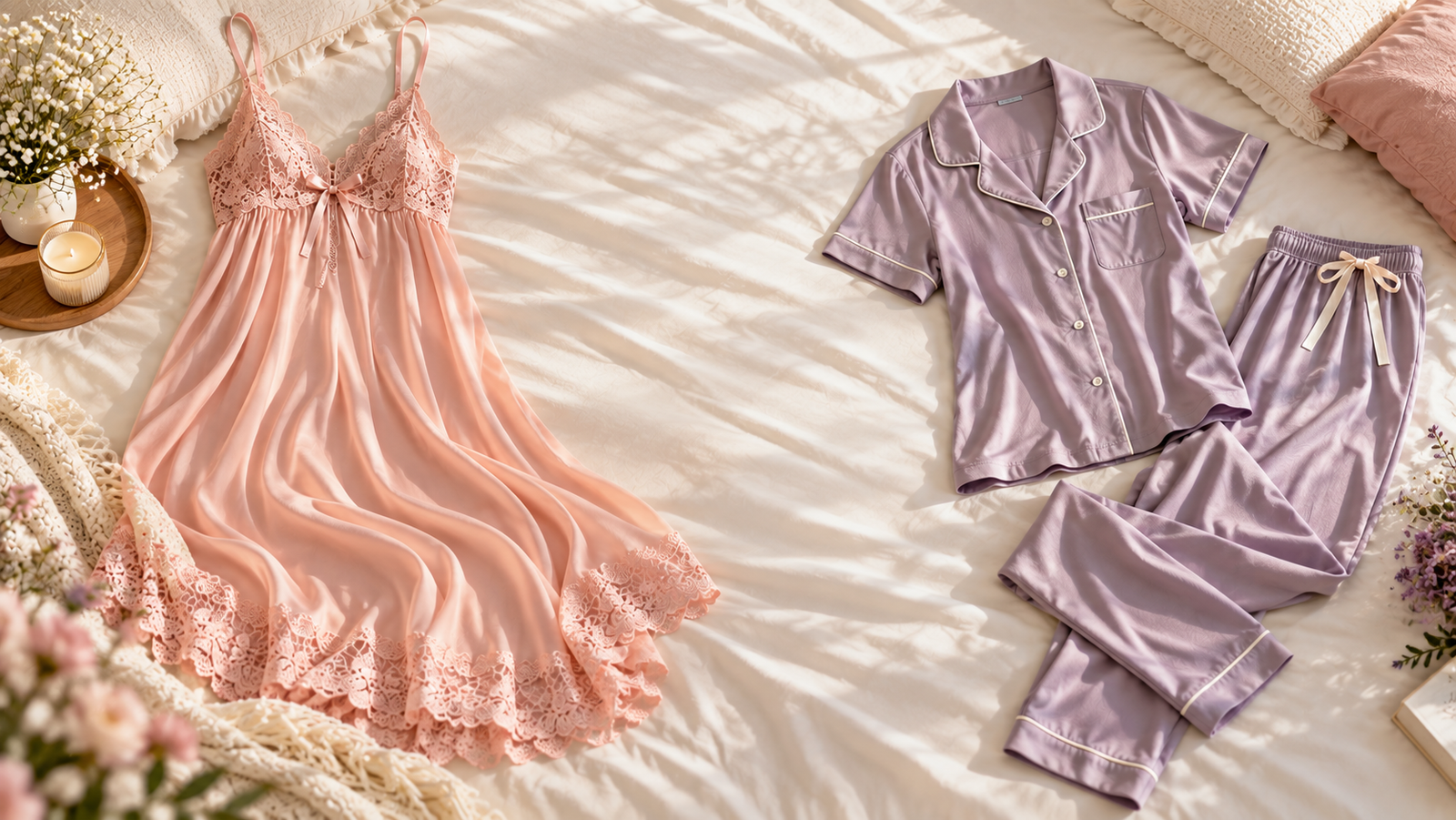
Choosing between a nightgown vs pajama set often comes down to one simple question: What feels better when you sleep?
A nightgown gives you a loose, one-piece layer with more freedom around the legs. A pajama set separates the top and bottom, giving you more coverage and usually more control over how much fabric you wear.
Neither option works better for everyone.
Your room temperature, preferred coverage, sleeping position, fabric choice, and how much you move during the night can all change which style feels more comfortable. Research also shows that sleepwear can influence thermal comfort because clothing affects the body’s interaction with the surrounding environment.
So when comparing nightgown vs pajama set, focus less on which garment looks better and more on how you actually sleep.
Nightgown vs Pajama Set: Quick Comparison
| Feature | Nightgown | Pajama Set |
|---|---|---|
| Construction | One-piece garment | Separate top and bottom |
| Leg coverage | Usually minimal to moderate | Usually moderate to full |
| Freedom of movement | High around the legs | Depends on fit |
| Warmth | Usually cooler | Usually warmer |
| Hot-weather comfort | Often excellent | Depends on fabric and length |
| Cold-weather comfort | Requires layering | Usually better on its own |
| Coverage | Low to moderate | Moderate to high |
| Best for | Hot sleepers, loose fit lovers | People who prefer coverage |
| Easy to layer | Yes | Yes |
| Midnight bathroom trips | Simple one-piece design | Two-piece design can be convenient |
| Style variety | Chemises, nighties, long gowns | Shorts, pants, button-downs, sets |
The right choice depends on what you want from your sleepwear rather than the garment category itself.
What Is a Nightgown?
A nightgown is a one-piece sleepwear garment designed to fall over the body without separate trousers or shorts.
The length can vary considerably. Some styles stop around the upper thigh, while others reach the knee, calf, or ankle. You can also find nightgowns in cotton, satin, silk, modal, rayon-derived fabrics, lace-trimmed constructions, and blends.
The defining feature is simple: the garment covers the upper body and continues downward as one piece.
That construction gives your legs plenty of room to move.
For people who dislike fabric bunching around the knees or ankles, that can make a noticeable difference.
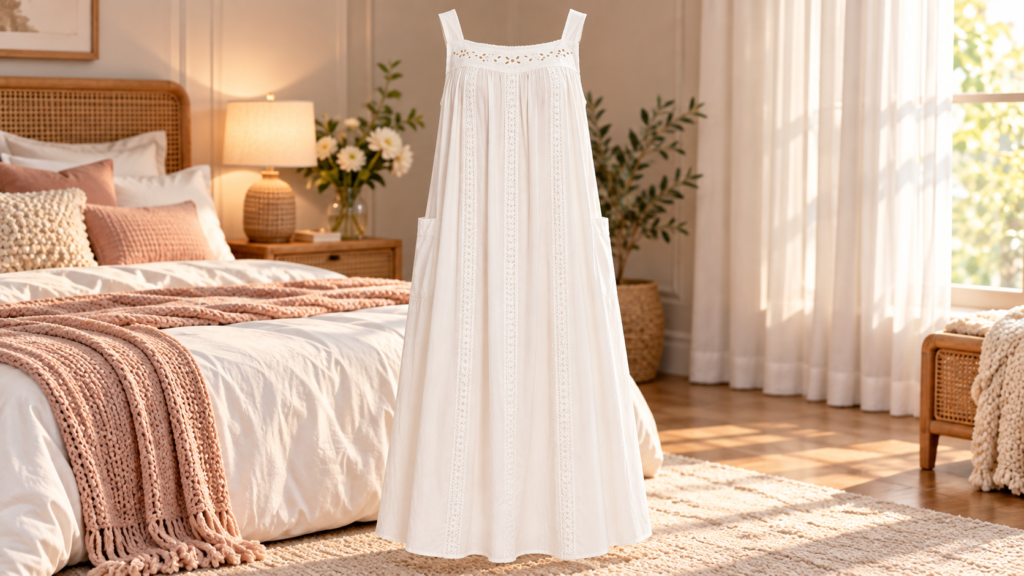
Who doesn’t love a 100% cotton nightgown?
YOZLY Cotton Nightgowns for Women are as soft as they look and super breathable.
What Is a Pajama Set?
A pajama set normally consists of two coordinated pieces: a sleep top and matching bottoms.
The top might look like a T-shirt, camisole, button-down shirt, or long-sleeve shirt. The bottoms can range from shorts to full-length pants.
This gives pajama sets an advantage when you want to adjust coverage.
You can choose shorts for warmer weather, long pants for colder nights, or a lightweight button-down set when you want more structure without heavy fabric.
Take a look at the soft Trendy Queen Women Pajamas Set. Who wouldn’t want to buy it?
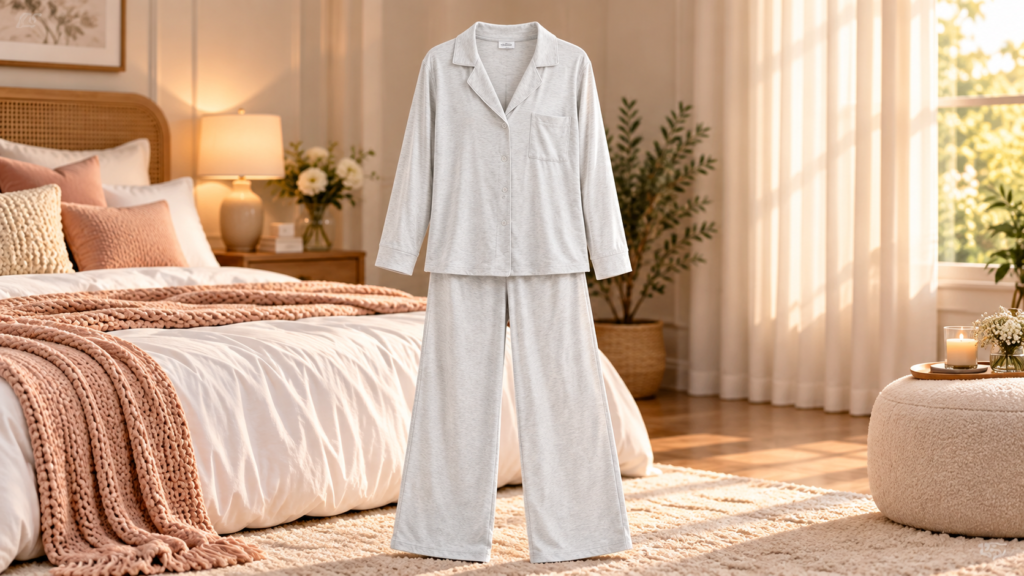
Pajama sets also tend to stay closer to the body than loose nightgowns, although the actual fit depends on the cut.
Nightgown vs Pajama Set: Which Is Better for Sleep?
There isn’t one universal winner.
A nightgown can work especially well when you want minimal fabric around your legs and a loose, uncomplicated fit. A pajama set can make more sense when you want consistent coverage or need extra warmth.
The better option is the one that helps you maintain a comfortable sleep environment without making you too hot, too cold, restricted, or irritated.
Thermal comfort matters because temperature regulation plays an important role during sleep. Research has found that excessive heat can increase wakefulness, while sleepwear and bedding influence the thermal conditions around the body.
You might want to take a look at: What is Nightgown vs Nightie vs Nightshirt?
1. Nightgowns Usually Offer More Leg Freedom
This is one of the biggest differences.
A nightgown leaves the legs relatively unrestricted. When you turn from your back to your side, the garment can move with you instead of wrapping around each leg.
That can feel particularly comfortable if you dislike tight waistbands, cuffs, or fabric around your knees.
A pajama set creates more contact between the garment and your legs. A loose pair of pajama pants can still feel unrestricted, but the additional fabric changes how the garment moves when you change positions.
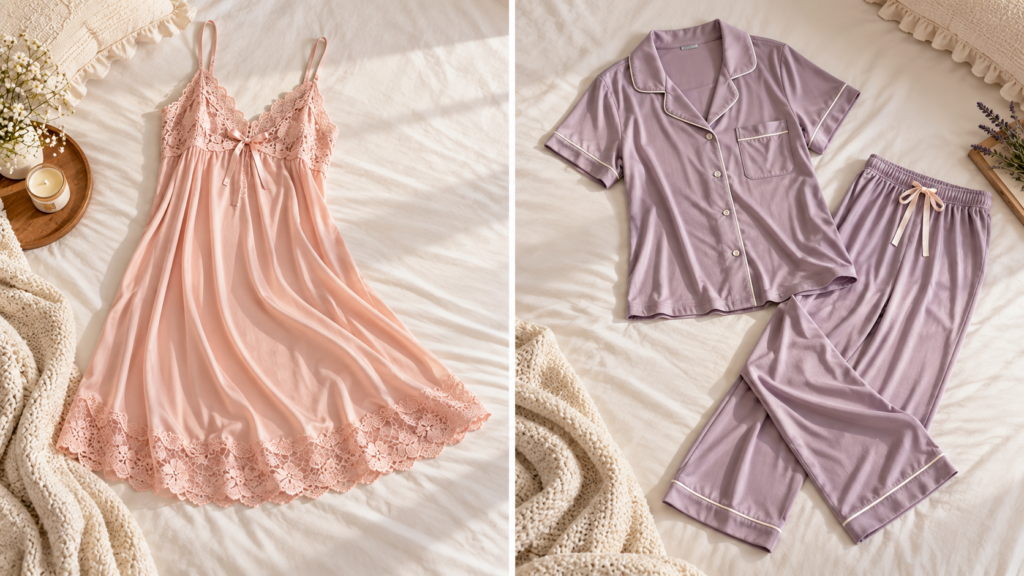
Choose a nightgown if: you want your legs to feel as free as possible.
Choose pajamas if: you prefer the feeling of fabric around your legs.
2. Pajama Sets Usually Provide More Coverage
Coverage becomes more useful when your bedroom feels cool, or you simply prefer having your legs covered.
A full-length pajama set gives you two additional layers of fabric compared with a short nightgown. That doesn’t automatically make it warmer, though. Fabric weight, fiber type, construction, fit, and room temperature all contribute to how warm a garment feels.
A lightweight cotton pajama set can feel very different from a thick flannel set.
The same applies to nightgowns.
A long-sleeve, ankle-length nightgown can provide substantially more coverage than a short camisole-style nightgown.
So don’t compare garment categories alone. Compare the actual garment design.
3. Nightgowns Can Work Well for Hot Sleepers
If you regularly wake up feeling overheated, reducing clothing coverage may help you feel more comfortable.
A loose, lightweight nightgown leaves the legs uncovered and can reduce the amount of fabric directly surrounding the body.
But fabric still matters.
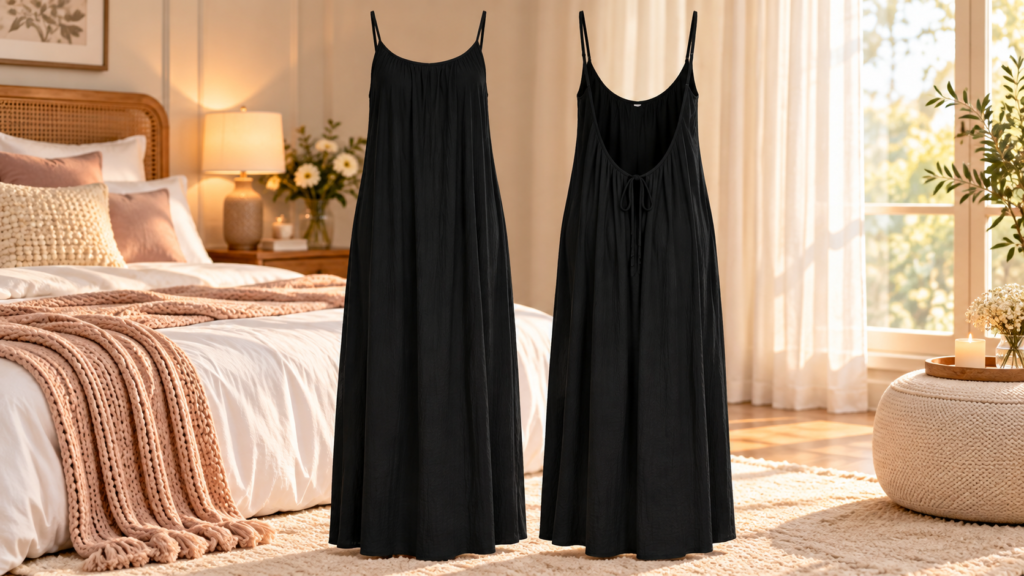
A lightweight, breathable-feeling material can behave very differently from a dense synthetic fabric, even when both garments have the same cut. Research on sleepwear fibers suggests that material properties can influence thermal comfort and sleep outcomes, although the evidence does not support a single universally superior fabric for everyone.
4. Pajama Sets Can Be Better for Cold Bedrooms
Cold rooms create a different problem.
Instead of trying to remove layers, you may want sleepwear that keeps more of your body covered.
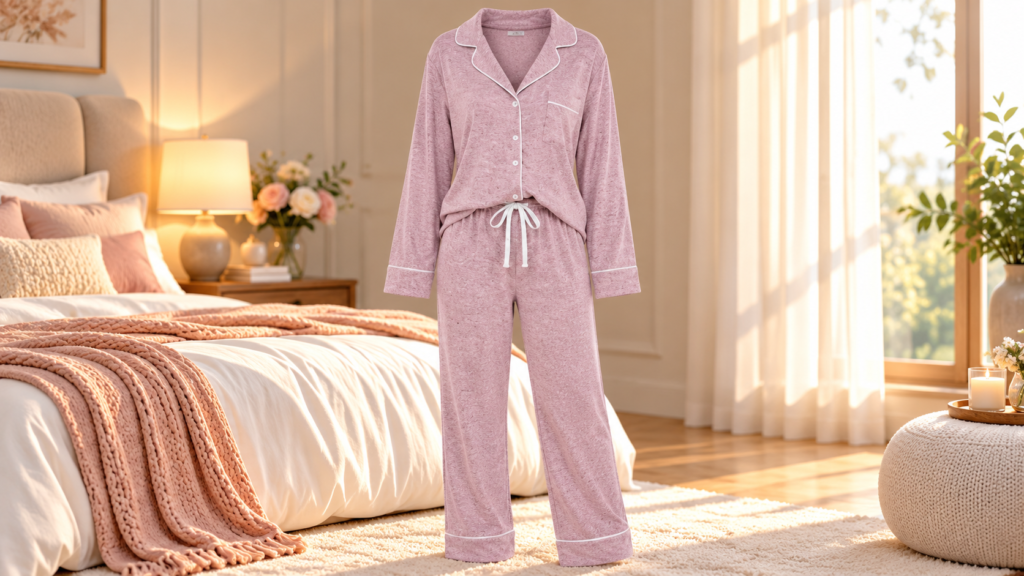
A long-sleeve pajama top paired with full-length pants provides coverage across the arms and legs. You can also add socks, a robe, or bedding without changing your base sleepwear.
That flexibility makes pajama sets useful when temperatures fluctuate.
And you don’t necessarily need heavy pajamas.
A lightweight long-sleeve set can provide more coverage without the bulk of fleece or thick flannel.
Nightgown vs Pajama Set for Different Sleeping Positions
Your sleeping position can also influence which construction feels less annoying at night.
Side Sleepers
Side sleepers often move their hips and legs repeatedly while changing positions.
A loose nightgown removes the waistband and leg seams from the equation, which some people may prefer.
A pajama set can work just as well when the pants have a flexible waistband and enough room through the hips and thighs.
Avoid choosing based only on size.
A garment can technically fit while still feeling restrictive when you bend your knees or turn onto your side.
Back Sleepers
Back sleepers may prefer either option.
A loose nightgown keeps the legs uncovered and avoids additional fabric underneath the knees. A relaxed pajama set provides more coverage without necessarily restricting movement.
The most important factor is often whether the waistband, seams, buttons, or decorative details create pressure points.
Combination Sleepers
If you move between your back, side, and stomach throughout the night, prioritize unrestricted movement.
A relaxed nightgown gives you the simplest construction.
A loose pajama set also works, particularly when the pants have a flexible waistband and aren’t overly fitted.
Which Is Better for Hot Weather?
For warm bedrooms, a lightweight nightgown often makes the simpler choice.
It usually exposes more of the legs and can reduce the amount of fabric surrounding your lower body.
But don’t assume that every nightgown will feel cooler than every pajama set.
A short polyester pajama set may feel lighter than a heavy satin or synthetic nightgown. Fabric construction and weight can change the experience considerably.
Research on sleepwear confirms that fiber type and thermal properties can affect sleepwear performance, but results vary by material, environment, and person.
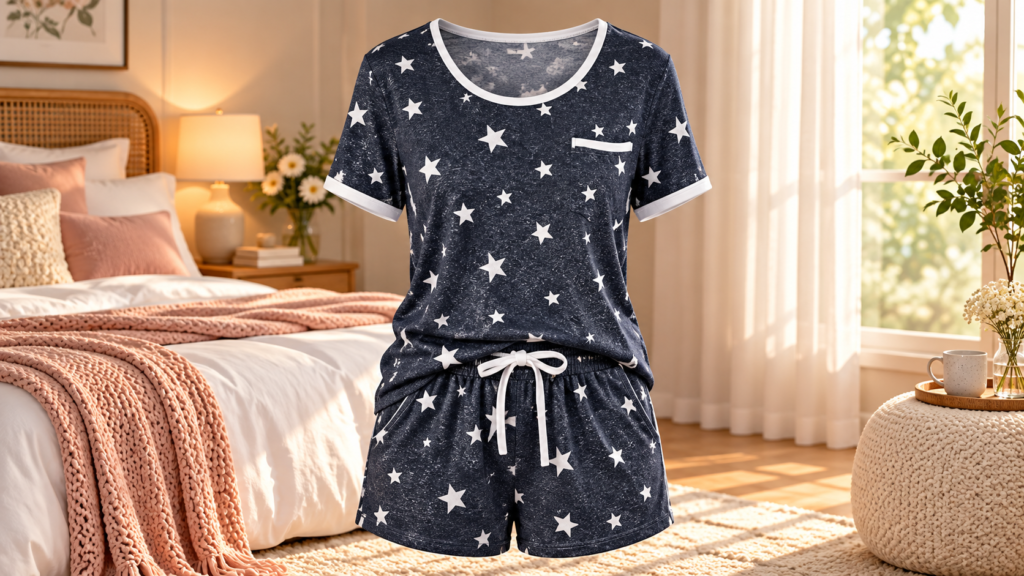
Look for:
- Lightweight fabric
- Loose construction
- Minimal layers
- Breathable-feeling materials
- Short sleeves or thin straps
- No tight waistband
Which Is Better for Cold Weather?
For colder bedrooms, a pajama set generally gives you more built-in coverage.
You can choose:
- Long-sleeve tops
- Full-length pajama pants
- Flannel sets
- Brushed cotton
- Medium-weight jersey
- Layer-friendly pajama sets
A long nightgown can also work well, especially when paired with a robe or cardigan-style layer.
The key is not to overheat under your bedding.
Sleep research consistently connects thermal conditions with sleep quality, so the goal isn’t maximum warmth. It’s comfortable warmth.
Nightgown vs Pajama Set: Which Is Easier to Layer?
Nightgowns make layering straightforward.
You can wear a lightweight nightgown as your base and add a robe when you get out of bed. You can also adjust your bedding without changing the garment itself.
Pajama sets give you another type of flexibility.
You can choose shorts and a T-shirt for mild weather, then switch to pants and long sleeves when temperatures drop.
For households where temperatures change significantly between seasons, having both styles in your sleepwear rotation can make more sense than trying to find one garment that works all year.
Which One Feels Less Restrictive?
Start with the areas where sleepwear makes contact with your body.
Check the:
- Waistband
- Armholes
- Neckline
- Hems
- Cuffs
- Seams
- Buttons
- Elastic
- Leg openings
A nightgown removes the need for a separate waistband and leg openings.
A pajama set introduces those elements, but a well-cut pair of pants can still feel extremely relaxed.
Fit matters more than the label on the garment.
A loose pajama set may feel less restrictive than a fitted nightgown, while an oversized nightgown may feel much freer than slim pajama pants.
Which Fabric Should You Choose?
Fabric choice can change the answer completely.
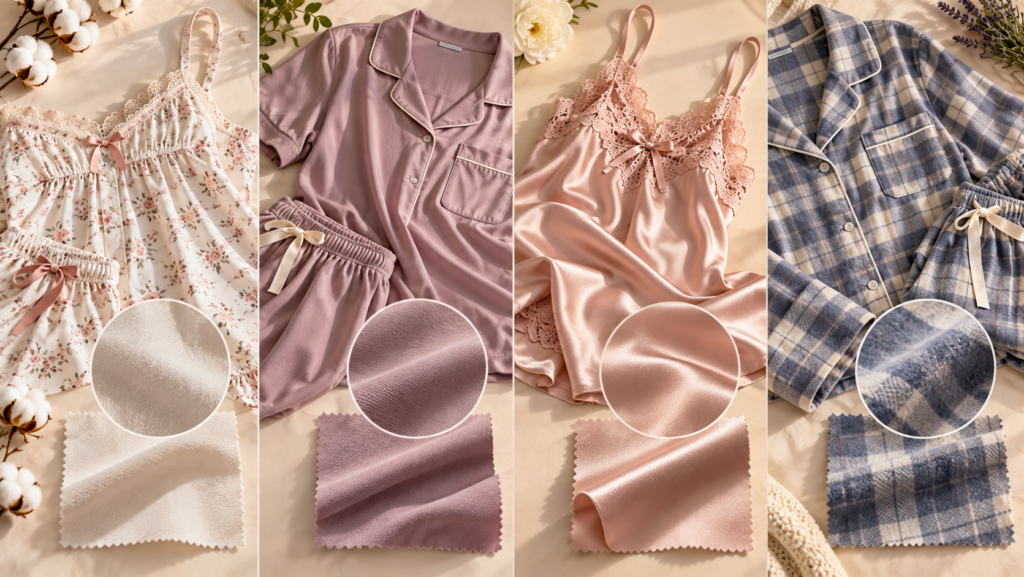
Cotton
Cotton remains a practical choice for everyday sleepwear because it is widely available in different weights and constructions.
A lightweight cotton nightgown can suit warm conditions, while a heavier cotton pajama set can provide more coverage in cooler weather.
Modal and Other Rayon-Derived Fibers
Modal and other rayon-derived fabrics often appear in soft, drapey sleepwear.
Their feel depends on the specific fiber, fabric construction, weight, and finish.
Don’t judge a garment solely from the fiber name. The finished fabric matters too.
Silk and Satin
Silk is a natural fiber.
Satin is a fabric construction or surface characteristic that can use different fibers, including polyester or silk.
That means a “satin pajama set” does not automatically mean a silk pajama set.
If you want silk, check the fiber composition.
Flannel
Flannel works well when warmth is the priority.
Its brushed surface and heavier construction can make it more suitable for colder nights than lightweight summer sleepwear.
Nightgown vs Pajama Set: What About Fit?
Fit can matter more than the garment category.
For a nightgown, check:
- Shoulder fit
- Armhole size
- Bust room
- Overall length
- Hem width
- Neckline comfort
For pajama sets, check:
- Shoulder width
- Sleeve length
- Waistband tension
- Rise
- Hip room
- Thigh room
- Pant length
Don’t automatically size up for sleepwear.
An oversized garment can create its own problems if fabric twists, bunches, or catches around your body.
The goal is room to move without excess fabric getting in the way.
When a Nightgown Makes More Sense
A nightgown may suit you if you:
- Sleep hot
- Prefer uncovered legs
- Dislike waistbands
- Move your legs frequently
- Prefer one-piece sleepwear
- Want a simple bedtime outfit
- Live in a warm climate
- Like loose, flowing silhouettes
A short cotton nightgown and a long satin nightgown can feel completely different, so choose based on the specific construction rather than the word “nightgown.”
When a Pajama Set Makes More Sense
A pajama set may suit you if you:
- Prefer covered legs
- Sleep in a cool bedroom
- Like coordinated pieces
- Want adjustable coverage
- Prefer sleeves and pants
- Want dedicated winter and summer sets
- Like a more structured fit
- Want sleepwear that can double as relaxed loungewear
A pajama set also makes it easier to mix coverage levels across seasons.
Can You Sleep Better in a Nightgown?
Possibly, but the garment itself doesn’t guarantee better sleep.
Sleepwear interacts with the rest of your sleep environment. Temperature, humidity, bedding, fabric, fit, and personal thermal preference all contribute to comfort. A 2024 systematic review found that sleepwear and bedding fibers can affect thermal comfort and potentially sleep quality, but the evidence varies by fiber and population.
That makes the better question:
Does this garment keep you comfortable without making you too hot, too cold, or physically restricted?
If yes, you’ve probably found a good sleepwear option.
Can You Sleep Better in Pajamas?
The same principle applies to pajama sets.
A pajama set doesn’t automatically improve sleep. It can, however, provide useful coverage and thermal insulation when your bedroom feels cool.
One study examining sleepwear under warm conditions found differences in sleep outcomes between wool, cotton, and polyester garments, showing that sleepwear material can influence the sleep environment. The researchers also emphasized the role of thermal and moisture-related properties.
Your personal comfort still comes first.
A fabric that performs well in one study doesn’t guarantee that you will prefer it.
Nightgown vs Pajama Set: Decision Guide
Use this quick guide when you’re shopping.
Choose a nightgown if you want:
- More leg freedom
- Less fabric around your legs
- A simple one-piece design
- A loose silhouette
- Minimal waistband pressure
- Warm-weather sleepwear
Choose a pajama set if you want:
- More coverage
- Covered legs
- More warmth
- Separate top and bottom pieces
- Seasonal flexibility
- A more structured sleepwear fit
Choose both if your sleep needs change throughout the year.
There is no rule saying your sleepwear drawer needs to follow one category.
Have You Made a Decision on Nightgown vs Pajama Set?
The better choice depends on your sleeping environment and personal comfort.
A nightgown gives you more freedom around the legs and can work particularly well for warm sleepers who dislike waistbands or fitted trousers.
A pajama set gives you more coverage and makes it easier to adjust warmth with different lengths, fabrics, and sleeve options.
If you sleep hot, start with a lightweight, loose-fitting nightgown or pajama set.
If you sleep cold, look for longer sleeves, fuller coverage, and a warmer fabric.
And if you aren’t sure, try both.
The best sleepwear is the one you stop noticing once you’re in bed.
Let us know how you feel about Nightie Wear Blogs. Feel Free to Reach Out to us – Contact Us.
Sleepwear Shopping Checklist
Before buying either style, check:
- Fabric: Does it suit your bedroom temperature?
- Fit: Can you move without pulling or restriction?
- Waistband: Does it sit comfortably without digging in?
- Length: Will the garment stay where you want it?
- Seams: Are there irritating areas?
- Coverage: Do you want your legs covered?
- Weight: Will the fabric feel too warm?
- Care: Can you wash it as often as you need?
- Construction: Are buttons, lace, elastic, or trims likely to bother you?
- Season: Will you use it mainly in summer, winter, or year-round?
One final rule helps simplify the entire decision:
Don’t shop for the category. Shop for the sleep experience.
A lightweight nightgown may beat a heavy pajama set on a hot night. A soft full-length pajama set may beat a short nightgown in a cold room.
Your preferred sleepwear can change with the season, the fabric, and even the night.
Leave a Reply