The fabric can change almost everything about how lingerie feels and performs. It affects softness, stretch, breathability, drape, opacity, durability, support, and even how a garment should be washed.
That makes lingerie fabrics worth understanding before you buy a bra, panty, chemise, corset, slip, or lingerie set.
You don’t need to memorize every textile term. Start with the basics: fiber tells you what the material is made from, while the fabric construction and finishing help determine how that fiber behaves in a garment.
Cotton, silk, polyester, nylon, rayon-derived fibers, elastane, lace, satin, mesh, and blends can all appear in lingerie. Each brings different characteristics, and manufacturers often combine several materials to balance comfort, stretch, structure, appearance, and durability.
What Are Lingerie Fabrics?
Lingerie fabrics are the textiles used to make intimate garments such as bras, panties, slips, chemises, bodysuits, corsets, and lingerie sets.
There isn’t one fabric called “lingerie fabric.” The category includes many fibers and constructions chosen for different purposes.
A lingerie garment might combine:
- A soft main fabric
- Stretch fibers for movement
- Lace for decorative detail
- Mesh for lightness or transparency
- Elastic for recovery and support
- Satin or another smooth fabric for drape
- Lining for coverage or comfort
This combination is why two garments with similar silhouettes can feel completely different.
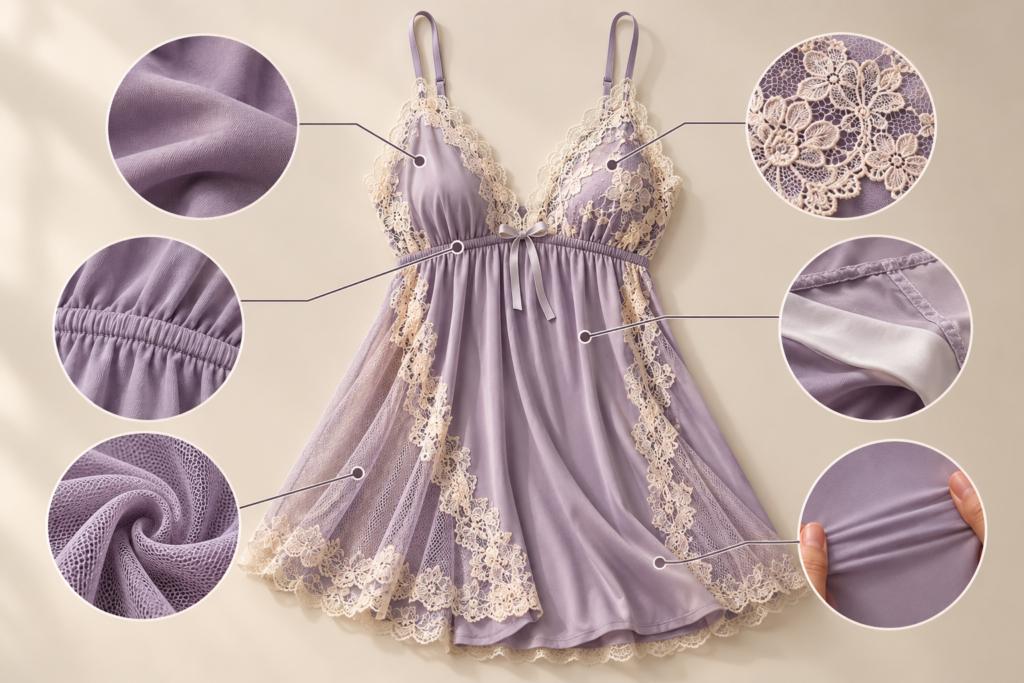
A lace lingerie set, for example, may use lace over a stretch base, elastic around the edges, and a different fabric for the gusset or lining.
Take a look at our blog: What is a Nightie?
Fiber vs Fabric: What’s the Difference?
These terms often get mixed together.
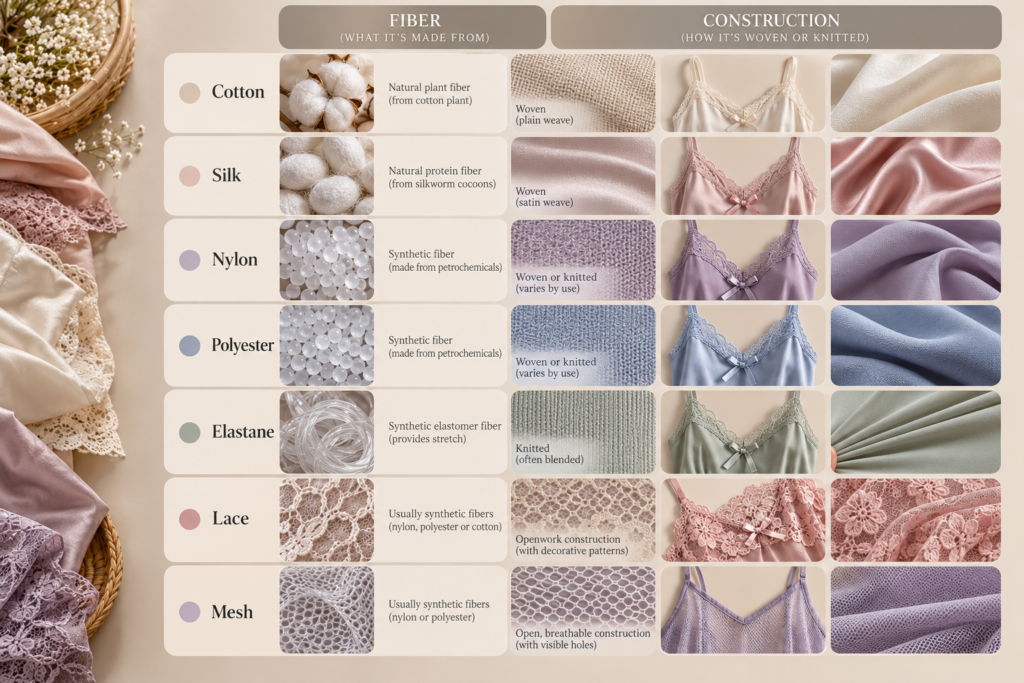
A fiber is the material used to make a textile. Examples include cotton, silk, polyester, nylon, and elastane.
A fabric is the textile structure produced from fibers through processes such as weaving or knitting.
Then you have terms such as satin, lace, mesh, and jersey, which describe particular constructions, surfaces, or textile structures rather than one universal fiber.
For example, “satin” doesn’t automatically mean silk. Satin can be produced using different fibers.
That distinction becomes important when you’re shopping. A product described as a “silk satin” garment is different from one made from polyester satin, even though both can have a smooth, glossy surface.
The Most Common Lingerie Fabrics
Several materials appear repeatedly in intimate apparel.
Cotton
Cotton is a natural fiber widely used in everyday underwear and lightweight intimate garments.
It can provide a familiar, soft feel and is available in many constructions and weights. Cotton blends can also add stretch, durability, or recovery.
Cotton works particularly well when comfort and everyday practicality take priority.
Silk
Silk is a natural protein fiber known for its smooth feel and distinctive drape.
It’s often associated with luxury lingerie, slips, robes, and sleepwear because of its appearance and fluid movement.
Silk requires more careful laundering than many synthetic fabrics, so check the garment’s care label rather than assuming every silk item should receive the same treatment.
Polyester
Polyester is a synthetic fiber commonly used across apparel. In lingerie, manufacturers may use it for satin-like surfaces, lace, mesh, microfiber, and blended fabrics.
Its performance depends heavily on the particular construction and finish.
Nylon
Nylon is another synthetic fiber frequently found in intimate apparel. It can provide strength and is often used in lightweight, smooth, and stretch-oriented constructions.
Elastane
Elastane is valued for its exceptional stretch and recovery. You’ll often see it blended with another fiber rather than used alone.
In lingerie, even a small percentage can make a major difference to how a garment stretches around the body and returns to its original shape.
Rayon-derived fibers
Rayon and related regenerated cellulose fibers can create soft, fluid fabrics used in apparel and sleepwear.
The specific fiber and manufacturing process matter, so don’t treat every rayon-derived textile as identical.
Lace
Lace is a decorative textile construction rather than one specific fiber. It can be made using different materials and may contain stretch fibers.
Its appearance, softness, transparency, and stretch can vary significantly.
Mesh
Mesh uses an open construction that creates a lighter, more transparent fabric. Lingerie manufacturers use it for panels, overlays, cups, and decorative details.
Cotton Lingerie Fabrics
Cotton is one of the easiest starting points for everyday lingerie.
Its familiar hand feel makes it popular for panties, bralettes, camisoles, and other garments worn close to the skin.
Cotton lingerie can also come in different constructions. A knitted cotton jersey, for example, behaves differently from a woven cotton fabric.
When cotton makes sense
Consider cotton when you prioritize:
- Familiar natural-fiber feel
- Everyday wear
- Straightforward fabric care
- Softness
- Casual styling
Cotton isn’t automatically the right choice for every situation. Stretch, weight, finishing, and garment construction still affect how the finished item feels.
Silk Lingerie Fabrics
Silk brings a distinctive combination of smoothness, drape, and sheen.
It’s commonly used in:
- Slips
- Chemises
- Robes
- Pajamas
- Camisoles
- Luxury lingerie
Silk can feel very different from synthetic fabrics designed to imitate its appearance. When shopping, check the fiber-content label rather than relying on terms such as “silky” or “silk-like.”

A silk satin pajama set can also illustrate an important point: the product name may combine a fiber term with a construction or surface term. Always inspect the listed material composition before assuming that “silk satin” means the garment is made entirely from silk.
Satin Lingerie Fabrics
Satin is often associated with lingerie because of its smooth surface and fluid appearance.
But satin is not synonymous with silk.
Satin describes a weave structure that can be produced from different fibers. A satin garment may use polyester, nylon, silk, or a blend.
That means two satin lingerie pieces can have very different:
- Prices
- Hand feels
- Drape
- Breathability
- Care requirements
- Durability
When comparing satin lingerie, look at the fiber content first, then consider the weave and finish.
Lace Lingerie Fabrics
Lace gives lingerie its distinctive open, decorative appearance.
Modern lingerie lace can contain:
- Nylon
- Polyester
- Cotton
- Rayon
- Elastane
- Blends
Some lace is rigid, while other lace constructions stretch with the body.
Stretch lace can work well around curved areas because it can move with the garment rather than behaving like a rigid decorative overlay.
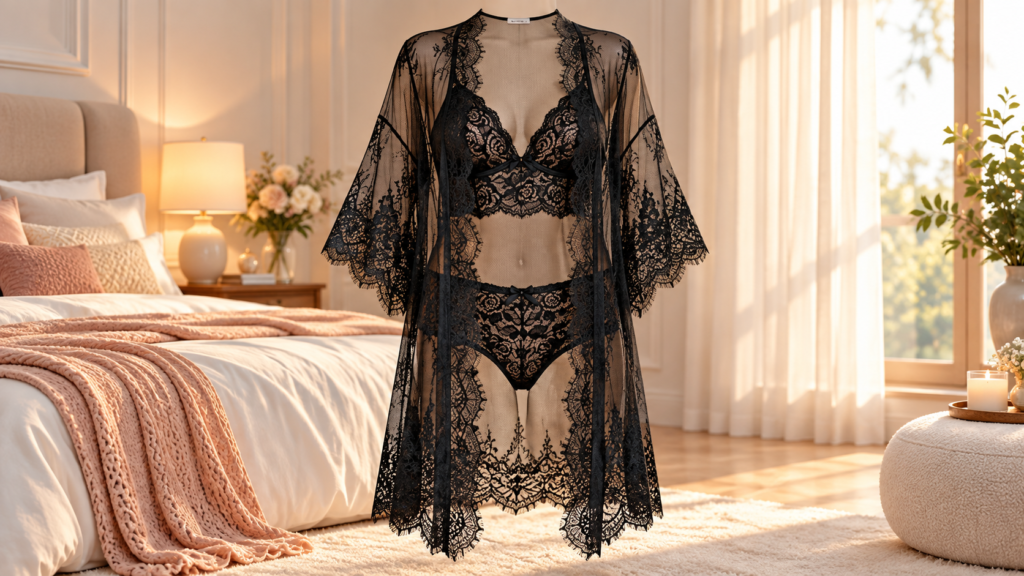
A lace lingerie set can combine several textile structures in one piece. The three-piece lace robe, bra, and panty set you supplied is an example of a garment category where lace, mesh, elastic, and other materials may work together rather than one fabric making up the entire product.
Mesh Lingerie Fabrics
Mesh is defined by its open structure.
Lingerie manufacturers can use mesh to create:
- Sheer panels
- Lightweight sections
- Decorative overlays
- Breathable zones
- Structured panels
Mesh can be soft and flexible or relatively firm depending on its fiber, construction, and finishing.
Don’t assume that every mesh garment will feel the same. Two products can both be labeled “mesh” while having very different stretch and hand feel.
Nylon and Polyester in Lingerie
Nylon and polyester are both common synthetic fibers in intimate apparel, but they aren’t interchangeable terms.
Their performance depends on:
- Fiber characteristics
- Yarn construction
- Knitting or weaving
- Finishing
- Fiber blends
- Garment construction
They can appear in smooth microfiber, lace, mesh, satin-like fabrics, and other lingerie constructions.
A garment that includes elastane can behave differently from one made from the same primary synthetic fiber without stretch.
What Is Elastane and Why Is It Used in Lingerie?
Elastane is a highly elastic synthetic fiber used to provide stretch and recovery.
You’ll often find it blended with cotton, nylon, polyester, or other fibers.
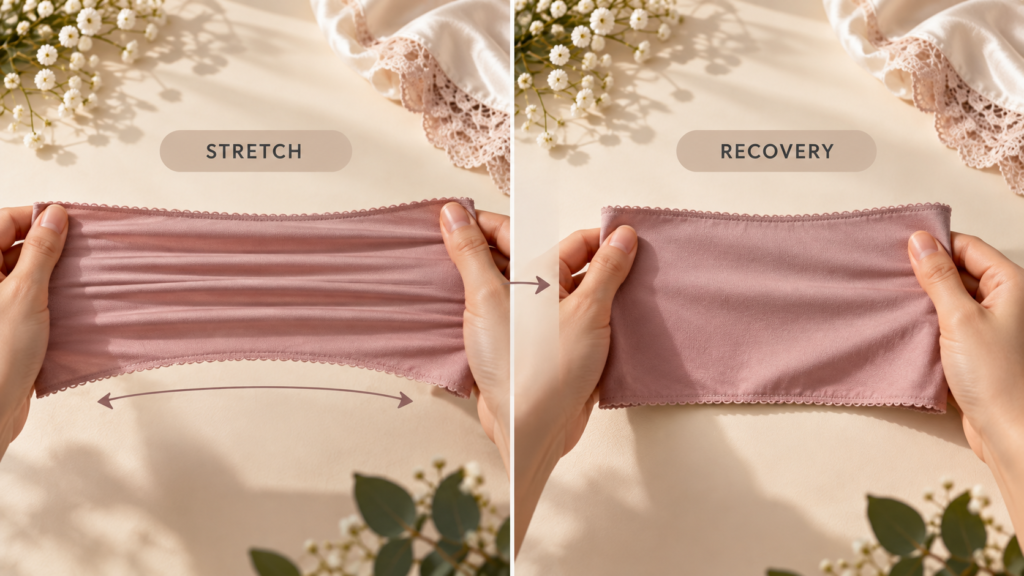
In lingerie, elastane can help a garment:
- Stretch around the body
- Recover its shape after movement
- Provide a closer fit
- Improve flexibility
- Reduce some fit restrictions
The percentage matters, but so does the garment’s overall construction.
A high-elastane fabric isn’t automatically more comfortable. The cut, elastic placement, compression, and sizing still determine how the finished garment feels.
What Is Microfiber in Lingerie?
Microfiber generally refers to extremely fine synthetic fibers rather than one specific fabric construction.
In lingerie, microfiber fabrics can create smooth, lightweight surfaces that work well for underwear and close-fitting garments.
They’re often chosen when manufacturers want a smooth finish under clothing.
But “microfiber” alone doesn’t tell you everything about the garment. Check the actual fiber composition and percentage on the product label.
What Are Blended Lingerie Fabrics?
Many lingerie garments use blends because no single fiber provides every desired characteristic.
A manufacturer might combine:
Cotton + elastane
for softness with stretch.
Nylon + elastane
for a lightweight, smooth, flexible construction.
Polyester + elastane
for stretch and shape retention.
Silk + another fiber
to change durability, cost, or care requirements.
Blending allows manufacturers to balance properties rather than relying on one material.

The Avidlove three-piece lace robe, bra, and panty set is another example of why looking at the full garment composition matters. A lingerie set may contain several materials across its main body, lace, lining, and elastic components.
Lingerie Fabric Comparison
| Material / Construction | Typical Characteristics | Common Lingerie Uses | Stretch Potential |
|---|---|---|---|
| Cotton | Familiar, soft, practical | Everyday underwear, bralettes | Depends on construction/blend |
| Silk | Smooth, fluid, luxurious | Slips, chemises, robes | Usually limited unless blended |
| Polyester | Versatile synthetic fiber | Satin, lace, mesh, blends | Depends on construction/blend |
| Nylon | Strong, lightweight synthetic | Lace, mesh, underwear | Often blended with elastane |
| Elastane | High stretch and recovery | Bras, panties, fitted lingerie | High |
| Lace | Decorative/open construction | Bras, panties, overlays | Depends on construction |
| Mesh | Open, lightweight structure | Panels, overlays, lingerie | Depends on construction |
| Satin | Smooth woven surface | Lingerie, robes, sleepwear | Depends on fiber/construction |
This table shows why comparing only the fabric name can produce misleading conclusions. “Satin,” “lace,” and “mesh” describe construction or appearance, while cotton, silk, nylon, and polyester describe fibers.
Which Lingerie Fabric Is Best for Everyday Wear?
There isn’t one universally best lingerie fabric.
For everyday underwear, shoppers often prioritize:
- Softness
- Comfortable stretch
- Breathability
- Smoothness under clothing
- Easy care
- Appropriate moisture management
- Good fit
A cotton-elastane blend may suit someone who wants a familiar natural-fiber feel with stretch. A smooth nylon-elastane construction may suit someone who wants a close-fitting, low-profile garment.
The right choice depends on how you wear the garment and what properties you prioritize.
Which Lingerie Fabrics Work Well for Sensitive Skin?
Fabric alone doesn’t determine whether a garment will feel comfortable against sensitive skin.
Other factors include:
- Dyes
- Finishes
- Seams
- Elastic
- Lace edges
- Tightness
- Moisture
- Friction
A very soft fabric can still irritate if the garment fits too tightly or has rough seams.
If you’re sensitive to certain materials, check the full fiber-content label and look for garments with construction details that minimize unnecessary friction.
Which Lingerie Fabrics Are Best for Hot Weather?
For warm conditions, many people prefer lighter fabrics and constructions that don’t trap as much heat.
Potential options include:
- Lightweight cotton
- Lightweight blends
- Fine mesh
- Lightweight modal or other regenerated-cellulose fabrics
- Lightweight silk
But “breathable” shouldn’t be treated as a property of a fiber alone. Fabric weight, knit structure, finishing, garment fit, and layering all affect how warm a garment feels.
A loose lightweight garment can feel very different from a tight garment made from the same fiber.
Which Fabrics Are Best for Lace Lingerie?
The answer depends on the type of lace you want.
If you want:
- Stretch: Look for lace containing elastane or a stretch construction.
- Structure: Look for firmer lace or a supporting base fabric.
- Softness: Pay attention to the lace edge and finishing.
- Sheerness: Examine the openness of the lace pattern.
- Durability: Check the fiber composition and care instructions.
The word “lace” alone doesn’t tell you how soft, stretchy, or durable the finished material will be.
What Is the Difference Between Silk and Satin Lingerie?
The simplest distinction is:
Silk is a fiber. Satin is a weave structure.
Silk can be woven into satin, but satin can also be made from synthetic fibers.
That’s why “silk vs satin” isn’t technically a direct fiber-versus-fiber comparison.
A silk satin garment combines the two concepts: silk is the fiber, while satin describes the weave.
This distinction becomes useful when comparing products. A polyester satin garment may have a smooth, glossy appearance similar to silk satin, but the underlying fiber is different.
What Is the Difference Between Lace and Mesh?
Lace and mesh can both create open or sheer areas, but their constructions and visual effects differ.

Lace typically emphasizes decorative patterns and ornamental structure.
Mesh generally emphasizes an open grid-like construction and can be used as a lightweight or sheer panel.
Some lingerie pieces use both.
For example, a garment might use lace across the cups and mesh across another section to create contrast between decorative and transparent surfaces.
What Is the Difference Between Fabric Weight and Fabric Thickness?
They’re related, but they aren’t identical.
Fabric thickness describes how physically thick a material feels or measures.
Fabric weight describes how much the fabric weighs for a given area.
A dense fabric can be relatively thin but heavy, while a lofty fabric can feel thicker without necessarily weighing more.
For lingerie, these differences affect:
- Drape
- Coverage
- Warmth
- Structure
- Layering
- How the garment feels against the body
Don’t assume that a thin fabric is automatically lightweight or that a thick fabric is automatically heavy.
Learn about the main differences between Nightgown vs Nightie vs Nightshirt.
Does Fabric Construction Affect Lingerie Fit?
Yes.
The same fiber can behave differently depending on how manufacturers construct it.
Knitted fabrics can offer significant stretch, while woven fabrics may have less give unless they include stretch fibers or specific construction techniques.
Lace, mesh, satin, and jersey can therefore produce very different fits even when they use similar fiber content.
Garment construction matters just as much.
A bra, corset, chemise, and panty place different demands on fabric because each garment interacts with the body differently.
Why Do Lingerie Manufacturers Use Different Fabrics Together?
Because different parts of a garment perform different jobs.
A lingerie piece may need:
- Stretch around the body
- Structure in another area
- Softness against the skin
- Decorative detail
- Elastic recovery
- Coverage
- Transparency
One fabric rarely provides all of those properties equally well.
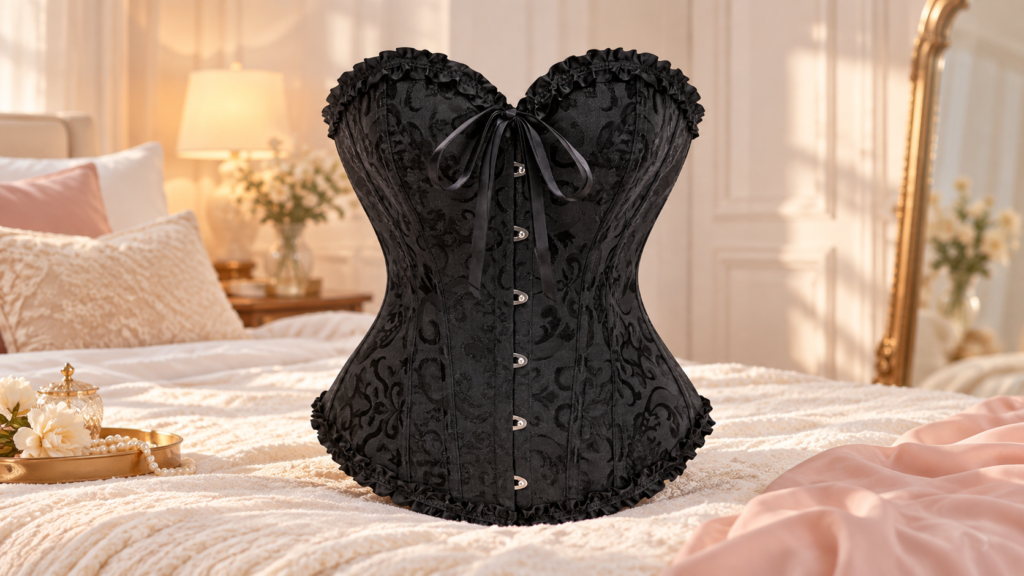
A corset is a good example. The SZIVYSHI 14-Bone Overbust Corset uses a much more structured garment concept than a lightweight chemise. That difference shows why lingerie fabrics need to be evaluated according to the garment’s intended function rather than simply ranked from “best” to “worst.”
How to Read a Lingerie Fabric Label
The fiber-content label is one of the most useful pieces of information when shopping.
Look for:
Fiber names
Identify whether the garment contains:
- Cotton
- Silk
- Polyester
- Nylon
- Elastane
- Rayon
- Other regenerated or manufactured fibers
Percentages
A garment labeled “95% cotton, 5% elastane” behaves differently from one labeled “60% polyester, 40% nylon.”
The percentage gives you a clearer picture of the material composition than a marketing name alone.
Care instructions
Fabric content doesn’t tell you everything about care. Follow the garment’s specific washing and drying instructions.
Decorative materials
Lace, mesh, elastic, lining, and trims may use different materials from the main body.
If you’re concerned about a specific fiber, check the complete product description and care label rather than only the headline.
What Does “Bamboo” Lingerie Fabric Actually Mean?
“Bamboo” deserves extra caution because the marketing term can be misleading.
The FTC states that textile products cannot simply be labeled or advertised as bamboo when they are actually rayon or viscose made using bamboo as the plant source. Such products should use the appropriate generic fiber name, such as rayon or viscose made from bamboo.
The FTC also warns that rayon made from bamboo does not retain the natural antimicrobial properties of the bamboo plant.
So when you see a lingerie or sleepwear product marketed as “bamboo,” check the actual fiber disclosure.
“Bamboo-derived viscose” and “bamboo fiber” should not be treated as interchangeable terms.
What Does OEKO-TEX or GOTS Mean for Lingerie?
Certifications can provide additional information, but they aren’t the same thing as fabric types.
GOTS, for example, is a textile-processing and certification standard rather than a fiber. The current GOTS standard is version 8.0, according to the Global Organic Textile Standard’s 2026 resources.
A certification can tell you something about the standards a product or supply chain meets, but it doesn’t automatically tell you whether the garment will feel soft, stretchy, lightweight, or comfortable.
Treat fiber content, construction, certification, and garment design as separate pieces of information.
How Should You Choose Lingerie Fabric?
Use the garment’s purpose as your starting point.
| If you prioritize… | Look for… |
|---|---|
| Everyday comfort | Soft, practical fabrics and comfortable stretch |
| Smooth fit under clothes | Fine, low-profile constructions |
| Stretch | Elastane-containing blends or stretch constructions |
| Luxury feel | Silk or smooth satin constructions |
| Decorative detail | Lace and mesh |
| Structure | Firm woven or structured materials |
| Warm-weather comfort | Lightweight fabrics and constructions |
| Easy care | Fabrics with practical care requirements |
| Minimal friction | Smooth fabrics and carefully finished seams |
These aren’t rigid rules. A fabric’s performance depends on its construction, blend, finishing, and the garment itself.
How to Care for Lingerie Fabrics
The correct care method depends on the specific garment.
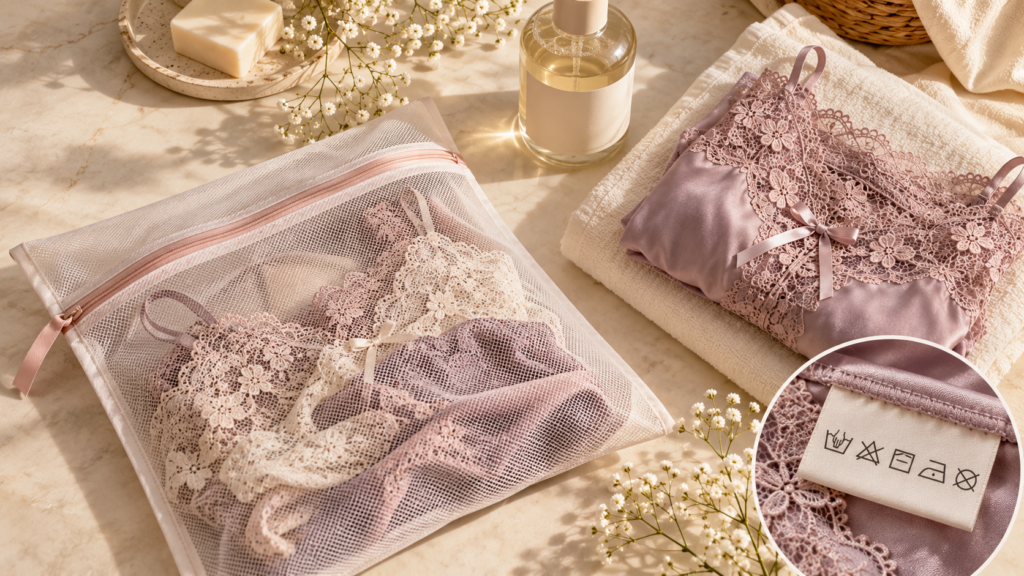
Check the care label first
The manufacturer’s instructions take priority because blends, dyes, trims, and construction can change how a garment should be washed.
Use a lingerie bag when appropriate
A mesh laundry bag can help keep delicate garments separated from rougher items during machine washing.
Avoid unnecessary heat
Heat can affect certain elastic fibers, delicate fabrics, and trims.
Handle lace carefully
Lace can catch on zippers, hooks, and rough surfaces.
Treat silk differently
Silk garments often require more careful washing and drying than everyday synthetic underwear.
Don’t assume all lingerie can be washed the same way
A cotton-elastane panty, silk chemise, structured corset, and lace bra can require completely different care.
How Do Lingerie Fabrics Affect Sustainability?
The environmental impact of a textile can’t be determined from the fiber name alone.
Consider:
- Raw-material source
- Fiber production
- Chemical processing
- Dyeing and finishing
- Manufacturing
- Garment lifespan
- Washing requirements
- End-of-life options
A natural fiber isn’t automatically environmentally superior in every situation, and a synthetic fiber isn’t automatically worse in every context.
Claims such as “eco-friendly,” “green,” or “sustainable” need evidence.
The FTC’s guidance on bamboo textiles provides a useful example of why consumers should look beyond environmental marketing language and examine what the textile is actually made from.
Common Lingerie Fabric Mistakes to Avoid
Assuming satin means silk
Satin can be made from several fibers.
Assuming bamboo means bamboo fiber
Many products marketed as bamboo are actually rayon or viscose made using bamboo as the plant source.
Choosing fabric without considering fit
A comfortable fiber won’t compensate for a poorly fitting garment.
Ignoring the fiber percentage
“Made with cotton” tells you much less than the actual fiber composition.
Treating lace as one specific material
Lace can use different fibers and constructions.
Ignoring care instructions
A delicate garment can lose its shape or finish if washed incorrectly.
Lingerie Fabric Glossary
| Term | Meaning |
|---|---|
| Cotton | Natural plant-based fiber |
| Silk | Natural protein fiber |
| Polyester | Synthetic fiber |
| Nylon | Synthetic fiber used widely in apparel |
| Elastane | Highly elastic synthetic fiber |
| Rayon | Regenerated cellulose fiber |
| Lace | Decorative textile construction |
| Mesh | Open textile construction |
| Satin | Weave structure associated with a smooth, lustrous surface |
| Jersey | Knitted fabric construction |
| Microfiber | Fabric/material made using very fine fibers |
| Blend | Textile containing two or more fiber types |
Do You Know How Many Lingerie Fabrics Are There?
Understanding lingerie fabrics becomes much easier when you separate three things: fiber, fabric construction, and garment design.
Cotton, silk, nylon, polyester, and elastane describe fibers. Lace, mesh, satin, and jersey describe particular textile constructions or structures. Manufacturers then combine these materials to create garments with different levels of stretch, softness, coverage, support, drape, and durability.
When shopping, don’t stop at a product’s marketing name. Check the fiber content, percentages, construction, fit, and care instructions. Those details tell you far more about how a lingerie garment will actually perform.
And when a product makes a material or sustainability claim – particularly around terms such as “bamboo” – check what the textile is actually made from before taking the marketing description at face value.
Let us know how you feel about Nightie Wear Blogs. Feel Free to Reach Out to us – Contact Us.
Frequently Asked Questions
What is the best fabric for lingerie?
There isn’t one best fabric for every lingerie garment. Cotton, silk, nylon, polyester, elastane blends, lace, mesh, and other materials serve different purposes. Choose based on comfort, stretch, garment function, climate, care, and personal preference.
What fabric is most commonly used for lingerie?
Lingerie commonly uses cotton, nylon, polyester, elastane, lace, mesh, and blends of these materials. Silk and other premium fabrics also appear in slips, chemises, robes, and luxury lingerie.
Is silk or satin better for lingerie?
Neither is automatically better. Silk is a natural fiber, while satin describes a weave structure that can use different fibers. Compare the actual fiber content, feel, drape, care requirements, and intended use.
Is lace a good fabric for lingerie?
Lace can work well for decorative lingerie, but its comfort and stretch depend on its fiber content and construction. Stretch lace can behave differently from rigid lace.
Is polyester good for lingerie?
Polyester can work well in lingerie, particularly when manufacturers use it for satin-like fabrics, lace, mesh, microfiber, or blended constructions. The finished garment’s construction matters as much as the fiber itself.
Is nylon good for lingerie?
Nylon is commonly used in intimate apparel because it can provide a lightweight, smooth, durable textile. It is often combined with elastane when stretch is required.
What fabric is best for everyday underwear?
A comfortable cotton or cotton-blend construction is one common option, but the best choice depends on fit, climate, personal preference, and the garment’s construction.
Is bamboo fabric really bamboo?
Not necessarily. The FTC says textiles made from rayon or viscose using bamboo as the plant source should be identified as rayon or viscose made from bamboo rather than simply being labeled bamboo.
Leave a Reply