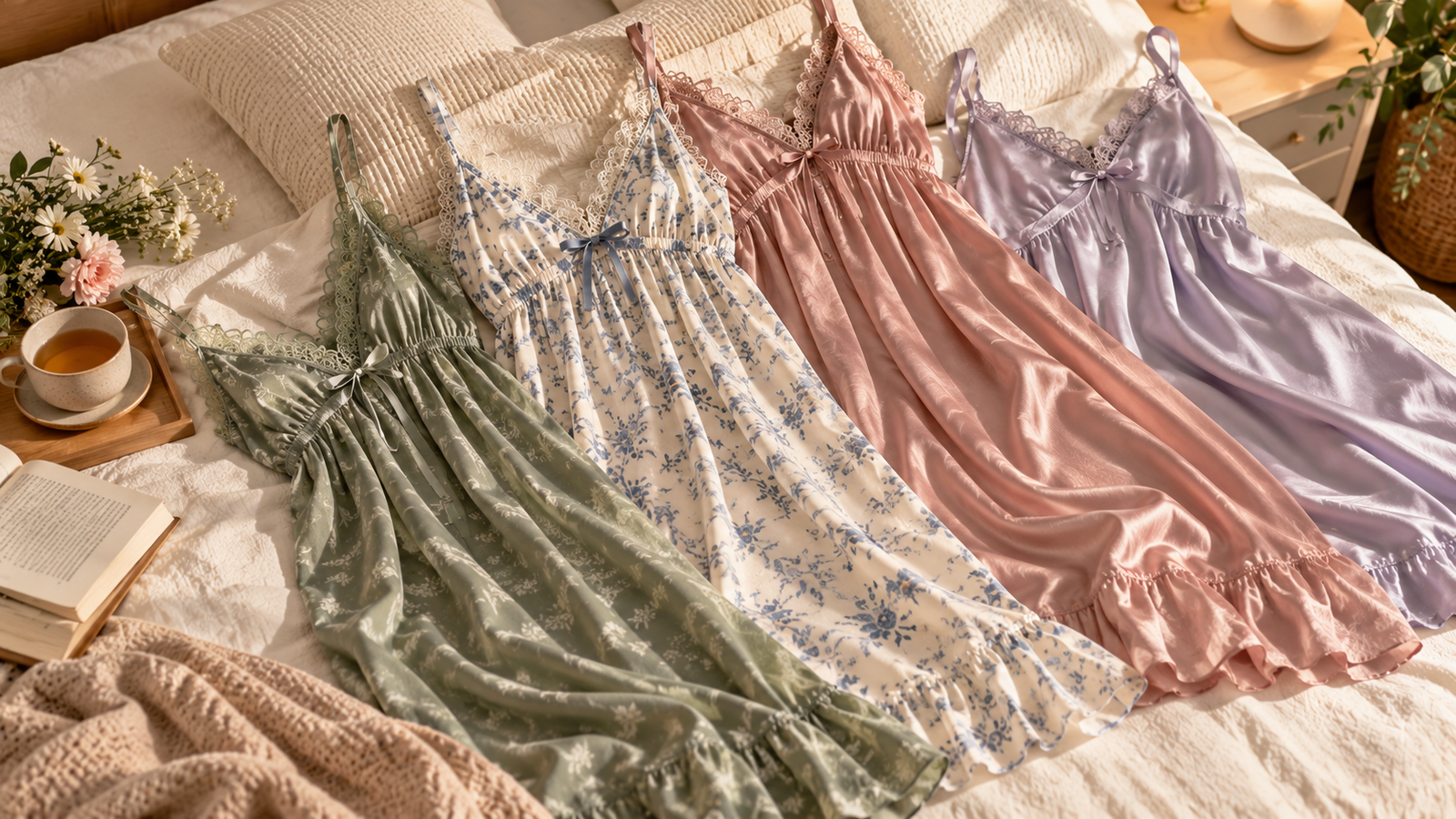
A nightie is an informal term for a nightgown or nightdress – a loose garment worn for sleeping. The term is especially common in British English, where nightie is used as a casual form of nightdress. In American English, nightie is also used informally for nightgown.
Unlike a specific style name, nightie describes a broad type of sleepwear. A nightie can be short or long, simple or decorative, sleeveless or designed with sleeves, and made from fabrics such as cotton, modal, satin, or other lightweight materials.
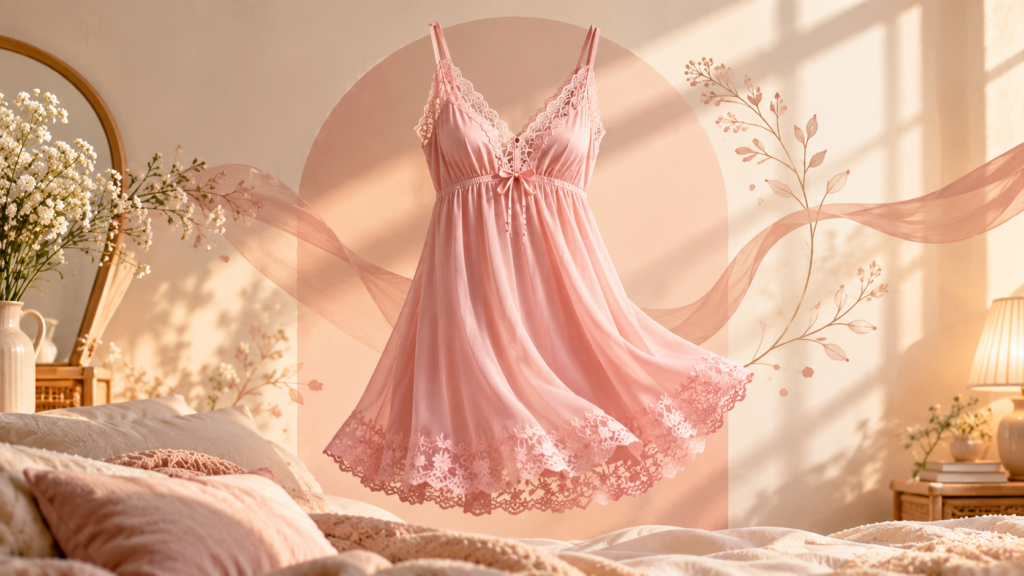
So, if you’re wondering what is a nightie, the simplest answer is: a loose, dress-like sleep garment worn to bed, usually referring to the same general category as a nightgown or nightdress.
What Does the Word “Nightie” Mean?
The word nightie is an informal name for a nightgown or nightdress.
Cambridge Dictionary defines nightie as an informal term for nightdress in UK English or nightgown in US English. Collins similarly defines it as a loose dress worn in bed and notes its use as an informal form of nightdress in British English.
That means there isn’t a strict construction rule that turns one garment into a nightie while another becomes a nightgown.
Two people can look at essentially the same sleep dress and use different names for it.
Nightie, Nightgown, and Nightdress
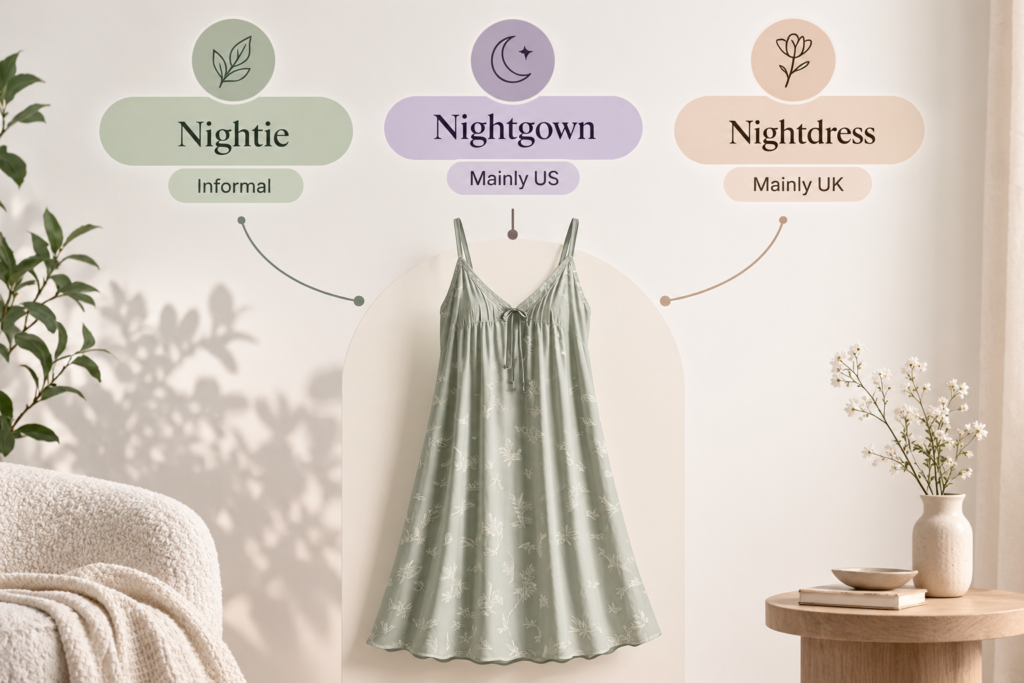
The terminology mainly changes by region and level of formality:
| Term | Common meaning |
|---|---|
| Nightie | Informal term for a nightgown or nightdress |
| Nightgown | Loose, dress-like sleepwear; especially common in US English |
| Nightdress | Loose dress worn in bed; especially common in UK English |
| Nightshirt | Loose, shirt-like garment designed for sleeping |
Cambridge lists nightgown as mainly US usage, with nightdress usually used in the UK and nightie as the informal term.
You might also want to take a look at Nightie Wear blog: Nightgown vs Nightie vs Nightshirt – What’s the Difference?
What Does a Nightie Look Like?
A nightie usually has a one-piece, dress-like shape.
It does not have the separate top-and-bottom construction you see in a traditional pajama set. Instead, the garment extends from the upper body toward the thighs, knees, calves, or ankles depending on its design.
Common nightie features include:
- Loose or relaxed fit
- One-piece construction
- Short, midi, or long hem
- Spaghetti straps or wider shoulder straps
- Short or long sleeves
- Scoop, V-neck, or other necklines
- Button-front designs
- Lace or decorative trim
- Side slits
- Stretch fabrics
- Lightweight construction
The exact design can vary significantly.
A simple cotton nightie might look like a relaxed sleep dress, while a charmeuse or lace-trimmed version can have a more polished appearance.
How Long Is a Nightie?
There is no standard nightie length.
You can find nighties that finish above the knee, around the knee, below the knee, or close to the ankle.
Shorter designs can feel less restrictive around the legs and may suit warmer sleeping environments. Longer designs provide more coverage and can feel more substantial in cooler rooms.
The important point is that length does not determine whether a garment qualifies as a nightie.
A short sleep dress can still be a nightie, just as a long nightdress can be one.
What Are Nighties Made From?
Nighties come in a wide range of fabrics. The right material depends on the desired feel, climate, fit, and care requirements.
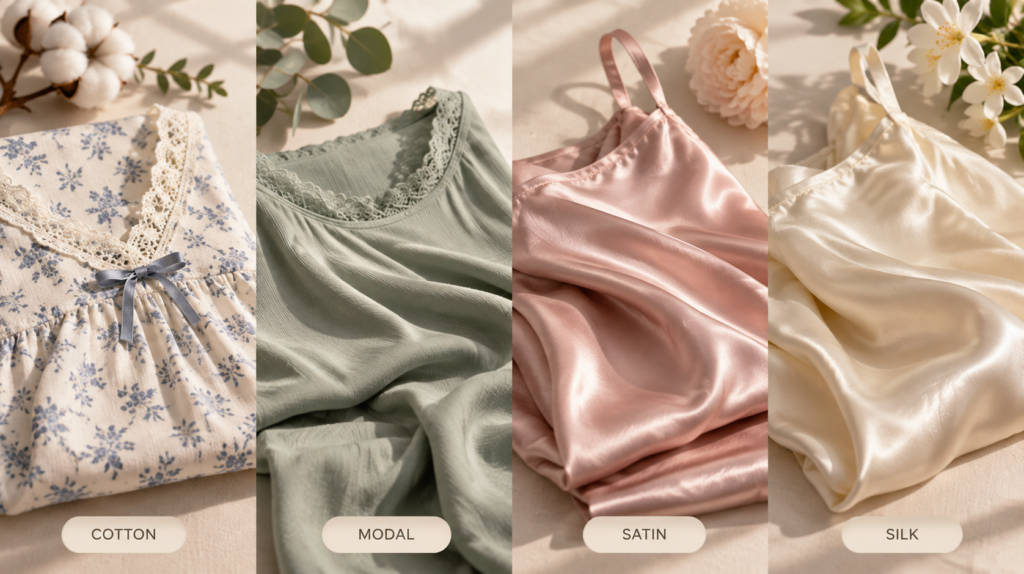
Cotton
Cotton remains a familiar choice for everyday sleepwear. It works well for people who prefer a straightforward fabric with a natural-fiber feel.
Cotton nighties can range from lightweight summer styles to heavier options designed for cooler nights.
Modal
Modal is often used in soft, lightweight sleepwear. Its smooth feel and stretch make it suitable for flowing nightie designs.
Satin
Satin creates a smooth surface and fluid drape. Keep in mind that satin describes a type of weave rather than a single fiber, so check the product’s actual material composition.
Silk
Silk is a natural protein fiber known for its smooth feel and distinctive drape. Silk nighties tend to have a more fluid appearance and require more careful handling than many everyday cotton styles.
Bamboo-derived viscose
Sleepwear marketed as bamboo is commonly made using regenerated cellulose fibers derived from bamboo. Check the fiber label and care instructions rather than assuming that every “bamboo” product has identical properties.
What Styles of Nighties Are Available?
Because nightie is a broad term, it includes many different designs.
Simple cotton nighties
These prioritize everyday comfort and easy care. They often have straightforward cuts with minimal decoration.
Lace-trimmed nighties
Lace can appear around the neckline, hem, straps, or bodice. It adds visual detail without changing the basic one-piece construction.
Chemise-style nighties
A chemise-inspired nightie usually has a lighter, more fitted or flowing silhouette with thin straps.
Button-front nighties
Button-front designs can provide adjustable coverage and make the garment easier to put on and take off.
Long nighties
Longer styles extend farther down the legs and can provide additional coverage.
Short nighties
Short styles usually end around the thigh or above the knee and can work well for people who prefer less fabric around their legs.
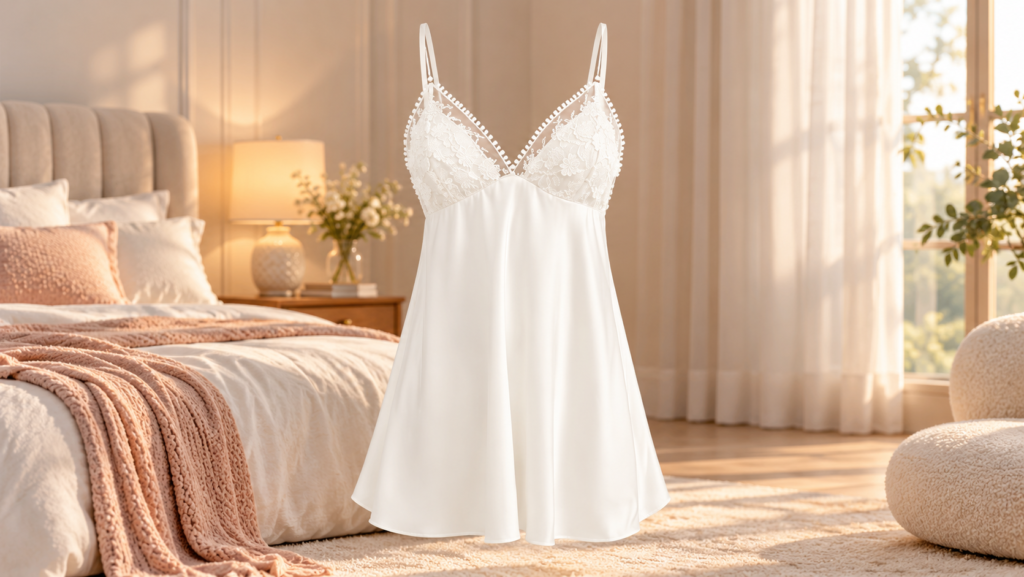
The Flora Nikrooz Women’s Kylie Charmeuse Chemise is an example of a more refined chemise-style option, with a lightweight, dress-like silhouette suited to readers looking for a polished nightwear style.
Is a Nightie the Same as a Nightgown?
Usually, yes.
The two terms commonly refer to the same broad category of sleepwear.
The difference is mostly linguistic. Nightie is an informal term, while nightgown is the standard name used in many American contexts. In British English, nightdress is another common term for the same general type of garment.
This is why searching for one term can bring up products described using all three.
Why Do Retailers Use So Many Different Names?
Online product titles often combine related search terms.
A seller may describe one garment as a:
- Nightie
- Nightgown
- Nightdress
- Nighty
- Sleep dress
- Nightwear
- Chemise
- Sleepshirt
These labels aren’t always precise garment classifications.
When shopping, look beyond the title. The photos, measurements, fabric composition, construction, and size chart tell you more about the garment itself.
Is a Nightie the Same as a Nightshirt?
No. Although retailers sometimes use the terms loosely, they usually describe different silhouettes.
A nightie is generally dress-like.
A nightshirt is generally shirt-like.
A nightshirt may have a straight body, shirt collar, button placket, or oversized T-shirt-style construction. A nightie usually flows downward like a dress.
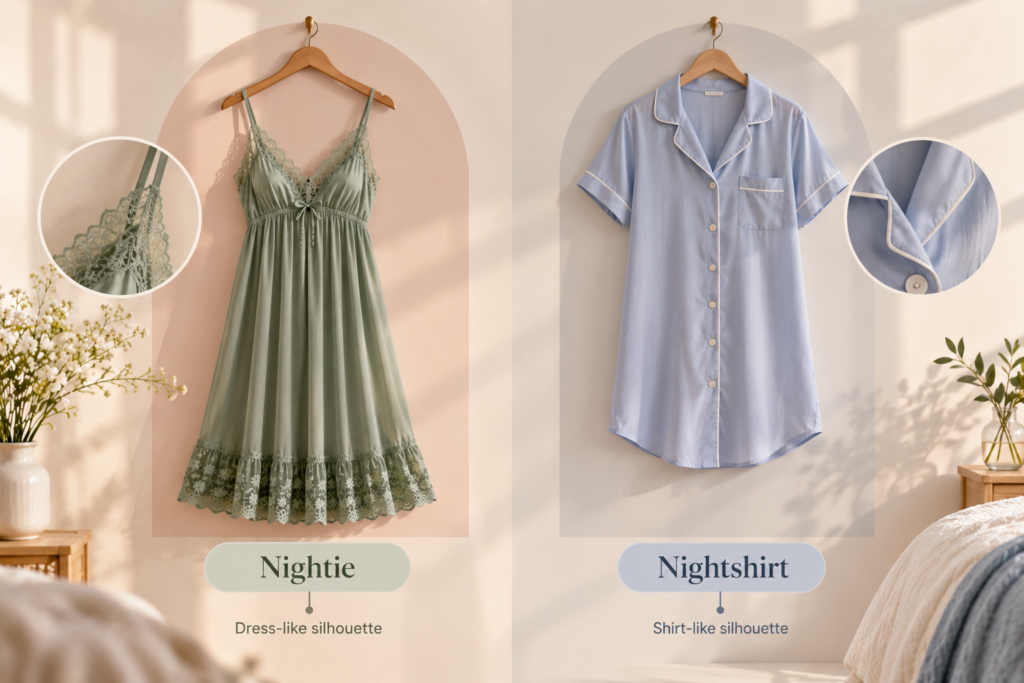
That difference becomes particularly useful when you’re deciding what type of sleepwear you actually want.
Is a Nightie Comfortable to Sleep In?
A nightie can be very comfortable, but the garment name doesn’t guarantee comfort.
Comfort depends on:
- Fabric
- Fit
- Length
- Seam placement
- Neckline
- Sleeve design
- Temperature
- Stretch
- Personal sleeping habits
A loose nightie can suit someone who dislikes waistbands because it doesn’t divide the garment around the waist.
Someone who tosses and turns frequently may prefer a shorter design that uses less fabric around the legs. Another person may prefer a longer nightie because they like additional coverage.
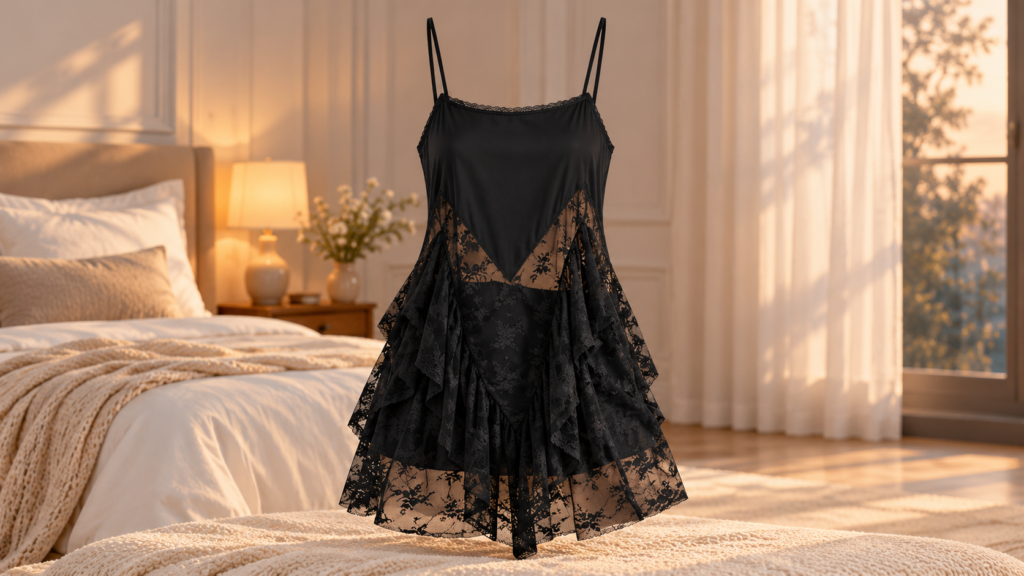
The Haellun flowy mini slip dress is an example of a lightweight, short silhouette with spaghetti straps. Its shape illustrates the kind of design someone might choose when they prefer minimal fabric and a loose, simple sleep-dress style.
What Should You Wear Under a Nightie?
That depends on the nightie’s construction and your personal preference.
Some people wear a nightie on its own. Others may prefer underwear underneath, especially with lighter or more relaxed designs.
If the garment has a built-in shelf bra or additional lining, you may not need another layer on top. If it has thin fabric or a low neckline, you may prefer an additional layer for coverage.
There is no universal rule. The important factors are coverage, comfort, fabric, and how the garment fits.
How Do You Choose the Right Nightie?
Start with how you plan to use it.
For everyday sleeping
Look for:
- Comfortable fabric
- Relaxed fit
- Easy-care construction
- A length that doesn’t interfere with movement
Cotton and modal can be practical starting points for everyday styles.
For warm weather
Look for:
- Lightweight fabric
- Breathable construction
- Minimal layers
- Sleeveless or short-sleeve designs
- Looser silhouettes
A shorter slip-style nightie can work particularly well if you dislike excess fabric around your legs.
For cooler weather
Look for:
- Longer lengths
- Sleeves
- Heavier fabric
- Layering options
A long cotton or flannel nightie can provide more coverage without requiring separate pajama bottoms.
For lounging
If you expect to wear your nightie outside the bedroom, consider:
- Opacity
- Coverage
- Fabric quality
- Construction
- Length
- Overall styling
A garment designed primarily as intimate sleepwear may not provide the same coverage or structure as a dedicated loungewear piece.
How Should a Nightie Fit?
A nightie should give you enough room to move comfortably without creating excessive fabric that twists or bunches during sleep.
Check:
- Shoulder or strap placement
- Bust fit
- Armhole comfort
- Waist and hip ease
- Hem length
- Overall garment width
Avoid choosing a size solely because you want a “loose” nightie. An oversized garment can still feel uncomfortable if the straps slip, the neckline shifts, or excess fabric gathers around your body.
Use the manufacturer’s size chart whenever possible because measurements can vary between brands.
How Do You Measure for a Nightie?
The measurements you need depend on the garment’s construction.
For most nighties, start with:
- Bust: Measure around the fullest part of your bust.
- Waist: Measure around your natural waist if the garment has a defined waist.
- Hips: Measure around the fullest part of your hips if the nightie has a narrower lower section.
- Length: Compare your preferred garment length with the seller’s measurement from the shoulder or another stated starting point.
Always check how the manufacturer takes measurements. A “length” measurement can mean different things depending on the product.
Can a Nightie Be Worn as Loungewear?
Some can, but it depends on the design.
A simple, opaque cotton nightie with a relaxed silhouette may work comfortably for lounging at home. A sheer lace chemise or highly decorative sleep dress may be designed more specifically for the bedroom.
Think about coverage and construction, not just appearance.
If you want one garment that works for both sleeping and lounging, look for opaque fabric, practical length, comfortable straps or sleeves, and a relaxed fit.
Are Nighties Only for Women?
The word nightie is commonly used for a nightgown or nightdress, particularly in descriptions of women’s and girls’ sleepwear. Dictionary definitions commonly frame it as a loose dress worn in bed by a woman or girl.
The broader concept of one-piece sleepwear, however, isn’t limited to one specific demographic. Retailers use different terminology for different audiences, so the garment’s construction is more useful than assuming that every type of sleep dress falls under one universal naming convention.
Nightie vs Pajamas
A nightie and a pajama set differ mainly in construction.
| Feature | Nightie | Pajamas |
|---|---|---|
| Construction | One piece | Usually two pieces |
| Bottom | Integrated into garment | Separate pants or shorts |
| Waistband | Usually none | Usually present |
| Style | Dress-like | Top-and-bottom combination |
| Coverage | Varies | Depends on top and bottom |
| Movement | Often unrestricted around the waist | More structured around the waist and legs |
Neither is automatically better.
A nightie may suit you if you prefer a one-piece garment without a waistband. Pajamas may work better if you like separate layers or want more coverage around your legs.
Nightie vs Chemise
The terms nightie and chemise can overlap in online retail, but chemise often refers to a particular lightweight, slip-like style.
A chemise may have:
- Thin straps
- A shorter hem
- A close or flowing fit
- Lace details
- Lightweight fabric
A nightie is the broader informal sleepwear term.
This is why a product can appear in searches for both categories even though the retailer calls it a chemise.
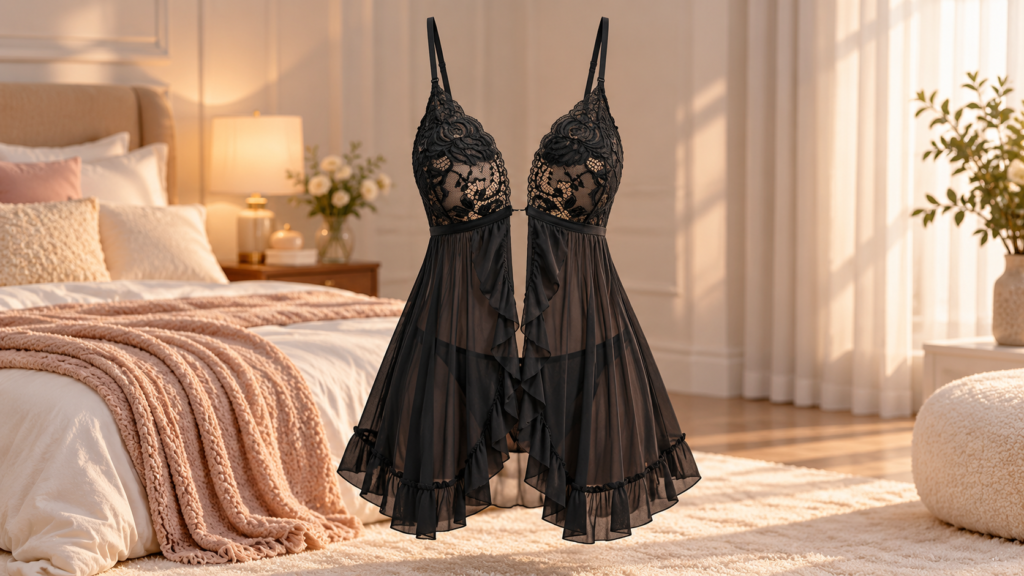
The two-piece night gown set you supplied is a more decorative example of how online listings can combine nightgown, lingerie, and sleepwear terminology. Its product format includes a separate matching piece, so it should not be treated as the definition of a nightie itself.
What Is the Difference Between a Nightie and a Nightdress?
In most everyday contexts, there is little practical difference.
Nightdress is a standard British term for a loose dress worn in bed, while nightie is the informal version. In American English, nightgown is the more common term.
So:
Nightdress → standard term
Nightie → informal term
Nightgown → common US term
The garment itself can be essentially the same.
Why Is It Called a Nightie?
The word is formed from night plus the informal diminutive ending -ie. Collins records the American English origin as nightgown + -ie and dates the word’s origin to the late 19th century.
The name reflects its basic purpose: clothing designed to be worn at night, particularly for sleeping.
What Makes a Good Everyday Nightie?
A practical everyday nightie doesn’t need elaborate details.
Look for:
- Fabric that feels comfortable against your skin
- Enough room through the body
- A neckline that doesn’t feel restrictive
- Straps or sleeves that stay in place
- A length that suits your sleeping position
- Care instructions you can realistically follow
- Fabric weight appropriate for your room temperature
If you sleep hot, prioritize lightweight construction. If you tend to feel cold, look for longer lengths or warmer fabrics.
The goal is not to find a nightie with the most features. It’s to find one whose fabric, fit, and construction match the way you actually sleep.
A Nightie Might be a Nightgown or Nightdress at Your Place
A nightie is simply an informal name for a nightgown or nightdress. It usually describes a loose, one-piece, dress-like garment worn for sleeping rather than one precise style or fabric.
That leaves plenty of room for variation. A nightie can be short or long, simple or decorative, cotton or satin, fitted or flowing. When choosing one, focus less on the label and more on the fabric, fit, length, coverage, and construction.
If you’re comparing different styles, start with how you sleep and the environment around you. That will usually tell you more about the right nightie than the product name alone.
Let us know how you feel about Nightie Wear Blogs. Feel Free to Reach Out to us – Contact Us.
Frequently Asked Questions
What is a nightie?
A nightie is an informal term for a nightgown or nightdress. It generally refers to a loose, dress-like garment worn for sleeping.
Is a nightie the same as a nightgown?
Usually, yes. Nightie is an informal term for nightgown or nightdress. The terminology varies by region.
What is another word for nightie?
Common alternatives include nightgown and nightdress. Nightdress is particularly common in British English, while nightgown is common in American English.
Is a nightie the same as pajamas?
No. A nightie is generally a one-piece, dress-like garment, while pajamas usually consist of a separate top and bottom.
Is a nightie the same as a nightshirt?
Not usually. A nightie generally has a dress-like shape, while a nightshirt has a shirt-like construction.
Can a nightie be short?
Yes. Nighties come in different lengths, from short styles to long nightdresses.
What fabric is best for a nightie?
There isn’t one universally best fabric. Cotton, modal, silk, satin, and other materials can work depending on your temperature, comfort preferences, desired drape, and care requirements.
Can you wear a nightie during the day?
Some opaque, modestly designed nighties can double as relaxed homewear, but more revealing or sheer styles are generally better suited to private wear.
Leave a Reply