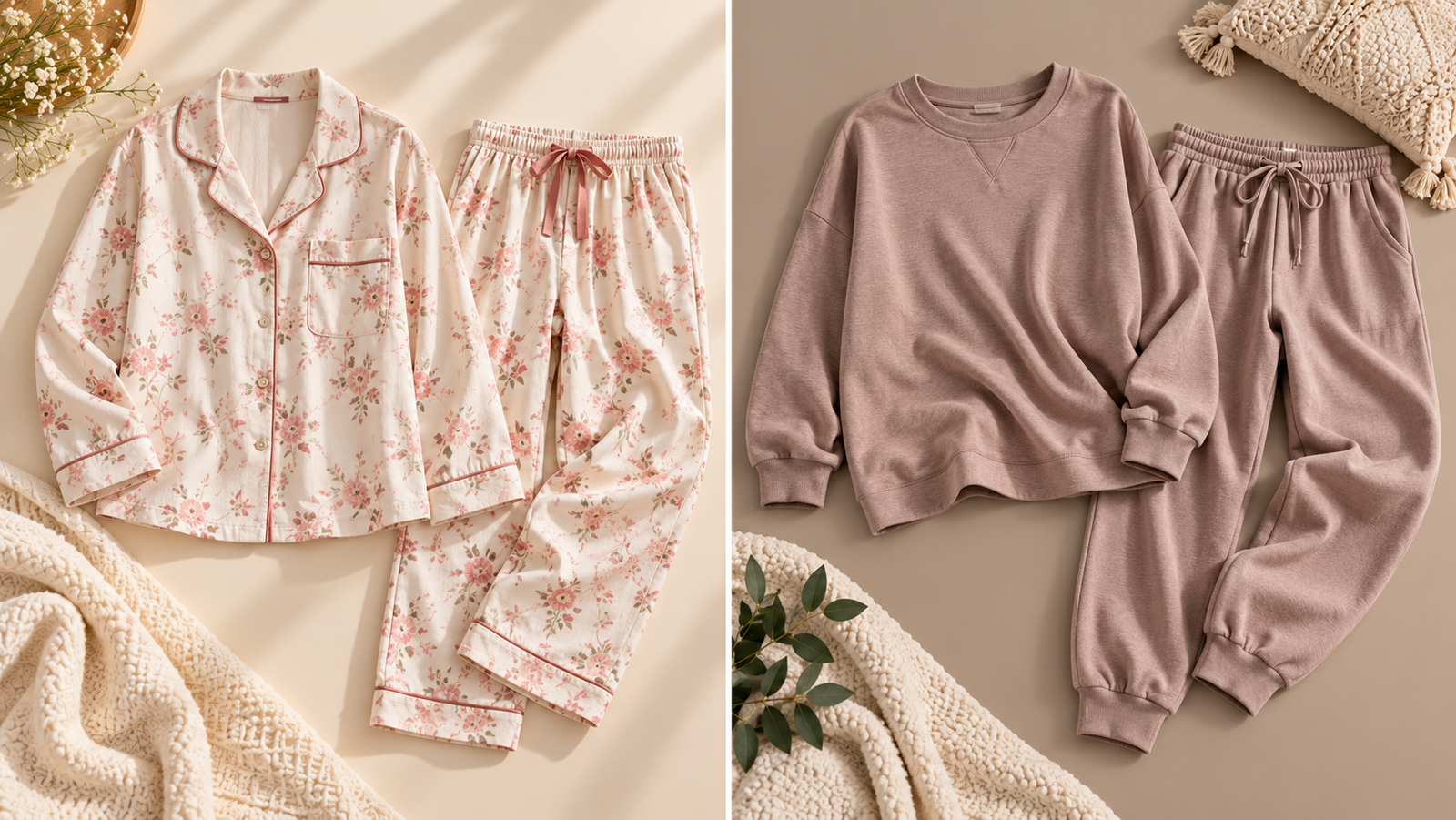
You finish work, change into something comfortable, and settle onto the sofa. Are you wearing pajamas or loungewear? The answer depends on more than whether your clothes feel soft.
Pajamas traditionally serve as clothing for sleeping. Loungewear gives you something comfortable to wear while relaxing at home, working remotely, or spending a quiet day indoors. But the categories overlap. A loose cotton set can work for both, while a satin two-piece might feel more like nighttime sleepwear or a polished lounging outfit, depending on its design.
So, when comparing pajamas vs loungewear, think about what you want your clothes to do. Do you need something designed for sleeping, or an outfit that keeps you comfortable throughout the day?
Let’s look at the differences in purpose, fabric, fit, styling, and everyday use, including where nightgowns, nighties, and lingerie fit into the picture.
What are Pajamas?
Pajamas are garments designed primarily for sleeping. A traditional pajama set includes a top and matching bottoms, although modern designs also include shorts sets, loose trousers, camisole sets, and other combinations.
Their main purpose is to help you feel comfortable in bed. Depending on the climate and your preferences, you might choose lightweight cotton for warm nights, soft jersey for everyday use, or flannel when temperatures drop.
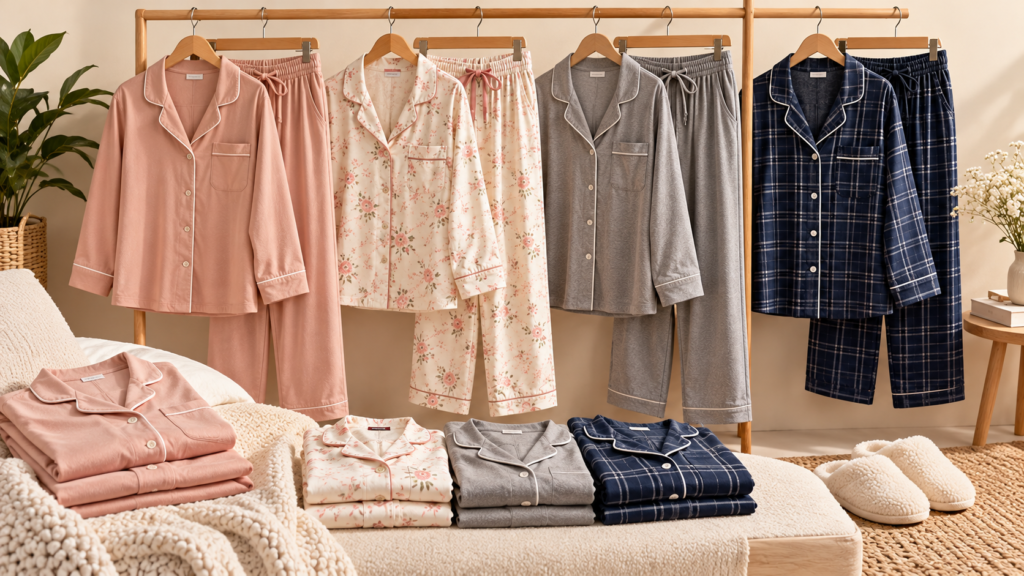
Common pajama styles include:
- Classic pajama sets: Matching tops and bottoms, often with a button-front shirt and relaxed trousers.
- Short pajama sets: A lightweight top paired with shorts.
- Camisole pajama sets: A sleeveless top with matching shorts or trousers.
- Thermal pajamas: Warmer garments designed for cooler conditions.
- Satin pajama sets: Smooth, often glossy sets that combine a sleepwear function with a more dressed-up appearance.
Pajamas do not have to look plain or basic. Prints, piping, lace trim, and coordinated colors can make them feel more personal without changing their primary purpose.
The key point is simple: pajamas are intended mainly for sleeping, even though many people wear them while relaxing at home.
What is Loungewear?
Loungewear is clothing designed for comfort during relaxed, everyday activities. You might wear it while reading, watching television, working from home, preparing breakfast, or spending a slow weekend indoors.
Unlike traditional pajamas, loungewear does not need to follow a specific sleepwear design. It can resemble casual everyday clothing while offering a softer feel, a looser fit, or more flexible movement.
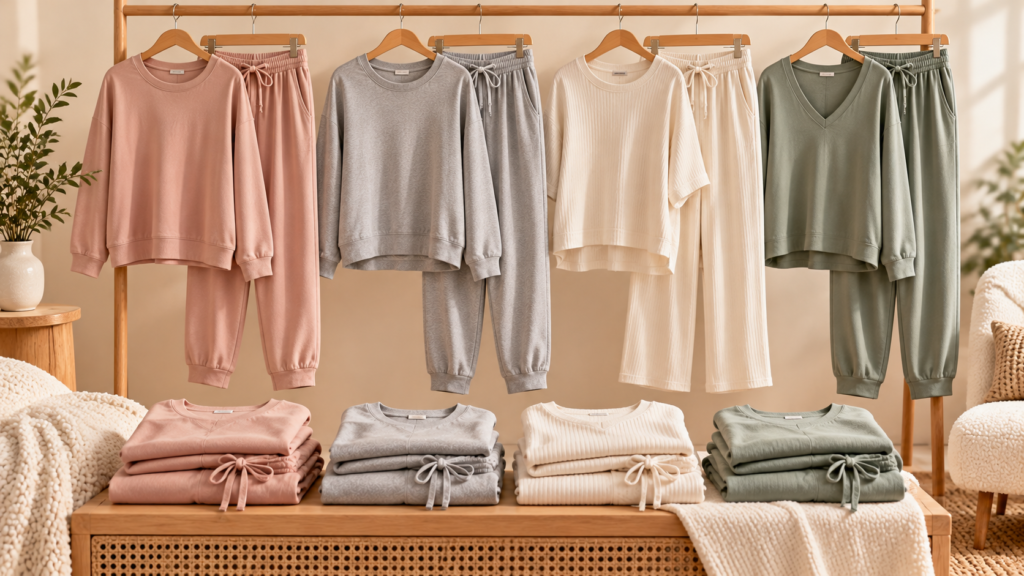
Common examples include:
- Matching lounge sets: Coordinated tops and bottoms in jersey, ribbed knit, or other comfortable fabrics.
- Joggers and sweatshirts: Relaxed separates suitable for lounging or casual errands.
- Lounge shorts and T-shirts: Simple combinations for warm weather.
- Soft knit trousers: Comfortable bottoms that pair with fitted tops, sweaters, or camisoles.
- Relaxed dresses and robes: Easy-to-wear pieces for home comfort.
Some loungewear outfits look polished enough for a quick trip to the shop or a casual coffee run. Others are deliberately relaxed and work best at home.
Loungewear also covers a wider range of styling choices. You can mix separates, layer pieces, and build outfits around your daily routine rather than matching everything to bedtime.
Pajamas vs Loungewear: What’s the Difference?
Pajamas and loungewear share one important quality: comfort. The difference comes down to their intended use, construction, and how easily they fit into activities beyond bedtime.
| Feature | Pajamas | Loungewear |
|---|---|---|
| Primary purpose | Sleeping | Relaxing and everyday comfort |
| Typical designs | Pajama sets, sleep shorts, camisole sets | Lounge sets, joggers, soft tops, relaxed dresses |
| Fit | Usually relaxed for sleeping | Ranges from loose to fitted |
| Fabrics | Cotton, jersey, flannel, satin, modal | Jersey, cotton blends, ribbed knits, fleece, modal |
| Styling | Often coordinated and sleep-focused | Often mixed, layered, or styled like casual clothing |
| Wearing outside the bedroom | Common for bedtime and home routines | Often suited to working from home and casual errands |
| Best choice depends on | Sleep comfort and temperature | Comfort, movement, and daily activities |
These are general patterns, not strict rules. A cotton lounge set can double as pajamas, and a satin pajama set can look perfectly at home during a relaxed evening on the sofa.
The label alone does not determine how you should wear a garment. Its fit, fabric, design, and your own comfort matter just as much.
Can You Wear Pajamas as Loungewear?
Absolutely. You do not need to change outfits just because you have finished sleeping and started your day at home.
A comfortable cotton pajama set can work for breakfast, reading, or a lazy Sunday. A matching satin set can feel equally suitable for a quiet evening. If the fabric feels comfortable and the design suits what you are doing, your pajamas can serve as loungewear too.
However, a few details can make a difference.
Consider the fabric. Lightweight cotton and breathable jersey can work well for extended wear, while heavier or warmer materials may feel less comfortable as the day gets warmer.
Check the fit. Pajamas with a comfortable waistband, enough room to move, and sleeves that do not get in your way can work well beyond bedtime.
Think about your routine. If you plan to work at your desk or step outside, you may prefer a set that looks more like casual clothing.
Pay attention to the condition. Sleepwear that has stretched out, become worn, or no longer fits comfortably may not be the best choice for an outfit you intend to wear throughout the day.
You can also change just one piece. Pair pajama trousers with a basic T-shirt, or wear a simple lounge top with comfortable cotton shorts. You do not need a completely separate wardrobe for every activity at home.
Can You Sleep in Loungewear?
Yes. Many loungewear pieces can double as sleepwear, especially when they use breathable, comfortable fabrics and do not restrict movement.
A soft cotton T-shirt and loose shorts, for example, can work just as well for sleeping as a dedicated pajama set. A lightweight jersey lounge set may also suit both daytime relaxation and bedtime.
Still, not every lounge outfit makes a good sleep outfit.
Structured waistbands, bulky seams, heavy sweatshirts, stiff embellishments, or restrictive cuts may become uncomfortable when you lie down. Some fabrics can also feel too warm for your sleeping environment.
Before using loungewear as pajamas, consider three things:
- Comfort while lying down: Check whether the waistband, seams, and closures press against your body.
- Temperature: Choose a fabric and thickness that suit your room and how warm or cool you tend to feel.
- Freedom of movement: You should be able to turn, stretch, and change sleeping positions without the garment pulling or twisting uncomfortably.
If your loungewear passes these checks, there is no need to treat it as daytime-only clothing. The best sleepwear is the clothing that helps you rest comfortably.
Which Fabrics Work Best for Pajamas and Loungewear?
Fabric can make two similar-looking outfits feel completely different. A lightweight cotton set may feel airy, while a thick fleece set can feel cozy but warm. The right choice depends on the garment’s construction, your environment, and how you plan to wear it.
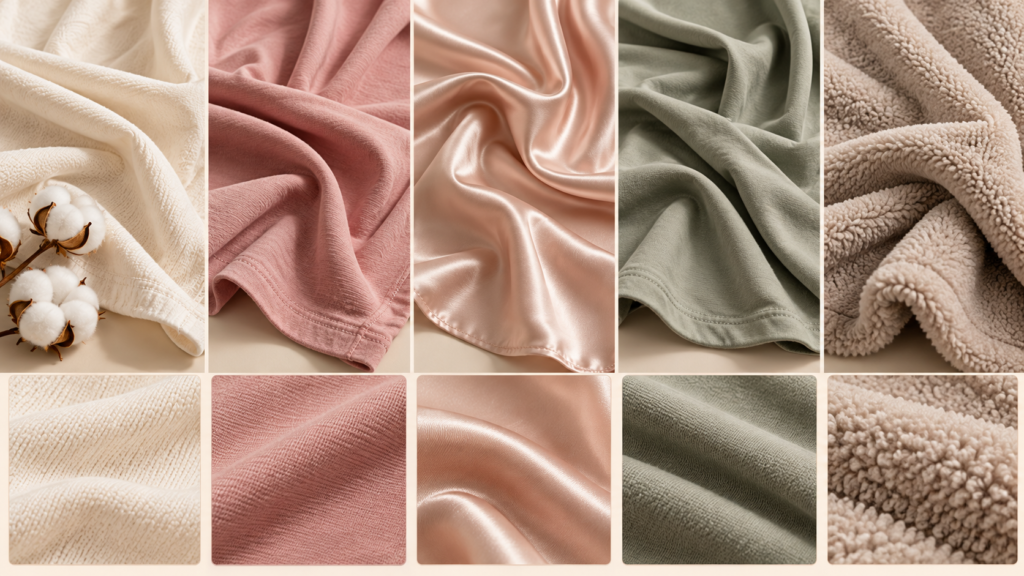
Here are some common options.
Cotton
Cotton is a familiar choice for both pajamas and loungewear. Lightweight cotton can feel comfortable against the skin, making it useful for everyday sleep sets, T-shirts, and shorts.
Cotton jersey adds stretch and a casual feel. Woven cotton pajamas, on the other hand, often have a more traditional button-front appearance.
Modal and Other Soft Cellulosic Fabrics
Modal and similar cellulosic fabrics often feel smooth and drapey. Brands use them in camisoles, lounge trousers, soft tops, and sleep sets.
These fabrics can work well when you want clothing that moves easily with your body. Check the garment’s fiber blend and care label rather than assuming every product marketed as soft or breathable will feel the same.
Satin
Satin describes a fabric weave, not a specific fiber. Satin garments can use polyester, silk, or other fibers, so their feel and care requirements vary.
Satin pajamas often have a smooth surface and a polished appearance. Satin camisoles and matching sets can also work as lounge pieces, particularly when you want something more refined than a basic cotton set.
Jersey Knit
Jersey knit is common in T-shirts, sleep shorts, lounge sets, and relaxed dresses. Its flexible structure makes it suitable for garments that need to move with you.
The weight and fiber content still matter. A lightweight jersey may suit warm conditions, while a heavier version can feel more substantial.
Fleece and Heavier Knits
Fleece and thicker knits are popular for cozy loungewear, sweatshirts, joggers, and cold-weather sleep sets. They can provide extra warmth, although heavier options may feel too hot for sleeping in a warm room.
For more detail on how different materials compare, read Nightie Wear’s complete guide to sleepwear fabrics.
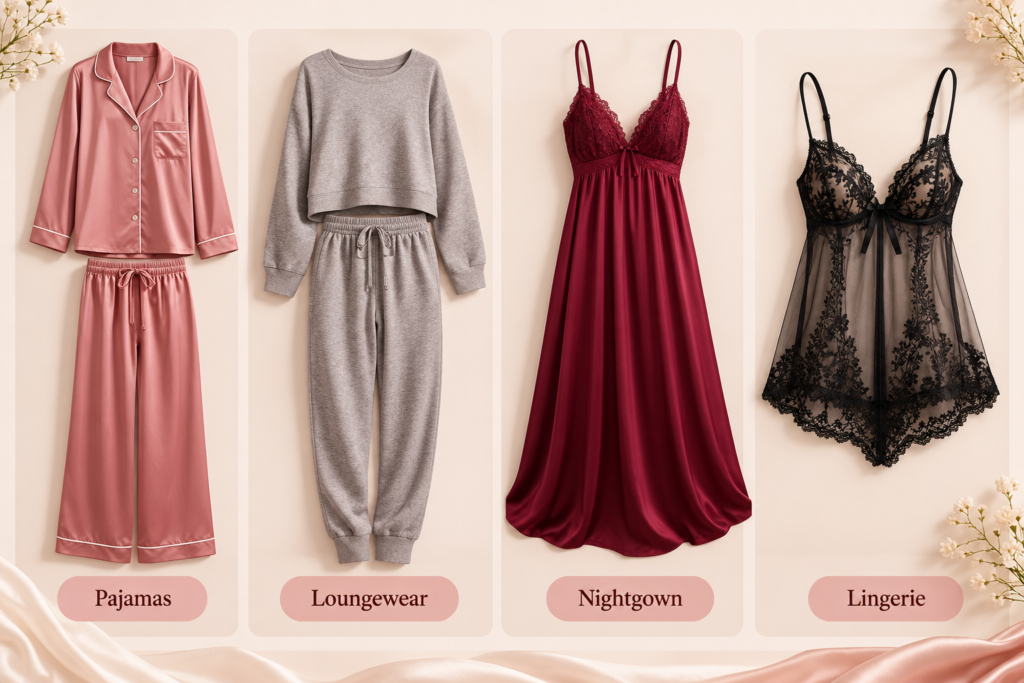
Where Do Nighties, Nightgowns, and Lingerie Fit In?
Pajamas and loungewear are not the only options for comfortable clothing at home. Nighties, nightgowns, and lingerie each have their own place, and some garments can serve more than one purpose.
Nighties and Nightgowns
A nightie is generally a lightweight, nightdress-style garment designed for sleeping or relaxing. Depending on the design, it may resemble a short slip, a loose camisole dress, or a longer flowing garment.
A nightgown usually refers to a longer sleep garment, although the terms nightie and nightgown overlap in everyday use. Both can offer an alternative to a two-piece pajama set, particularly if you prefer a single garment without a waistband.
Neither term automatically means the garment works as everyday loungewear. A simple cotton nightgown may feel comfortable for a quiet morning, while a delicate lace nightie may feel more suited to bedtime or private relaxation.
If you are unsure how these garments differ, explore our guides to what a nightie is and nightgown vs nightie vs nightshirt.
Lingerie
Lingerie includes intimate garments such as bras, panties, bodysuits, chemises, and babydolls. Some pieces focus on everyday support, while others emphasize decorative details, sensual styling, or a particular silhouette.
Lingerie is not automatically sleepwear or loungewear. A soft camisole may work under a lounge cardigan, and a comfortable bodysuit can form part of an outfit. A structured or delicate piece, however, may not offer the coverage or freedom of movement you want for sleeping.
Think about the garment’s actual purpose rather than assuming that all intimate apparel belongs in the same category.
Daily Intimates
Daily intimates are the foundational pieces you wear close to your body, including everyday bras, panties, and other undergarments. They support your daily wardrobe rather than replacing pajamas or loungewear.
For example, you might wear daily intimates beneath a lounge set, sleep in a comfortable bra-free pajama top, or choose a nightgown that does not require a separate top and bottom.
The categories can work together, but each serves a different need. Your choice depends on comfort, coverage, support, and the activity ahead.
At Nightie Wear, we explore these overlapping categories across Sleepwear, Daily Intimates, and our Learning Center, helping you understand the garments you wear and how they fit into everyday life.
How to Choose Between Pajamas and Loungewear
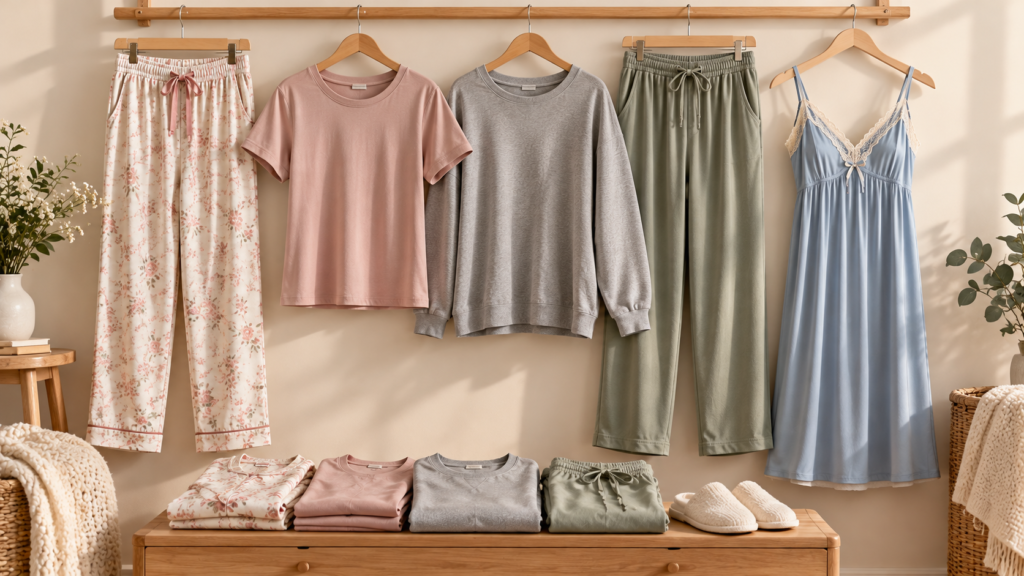
You do not need a large wardrobe to cover both sleeping and relaxing at home. Start with the activities you do most often, then choose garments that suit those routines.
Choose pajamas if:
- You want a dedicated outfit for bedtime.
- You prefer a coordinated sleep set.
- You need lightweight or warm clothing suited to your sleeping environment.
- You like sleep-focused details such as soft waistbands, relaxed cuts, and simple closures.
Choose loungewear if:
- You spend long periods relaxing or working at home.
- You want pieces that mix easily with other casual clothing.
- You need more flexibility for moving between the sofa, desk, and everyday errands.
- You prefer outfits that look like casual daywear without sacrificing comfort.
Choose pieces that do both if:
- You want to keep your wardrobe simple.
- You prefer soft, breathable garments with a relaxed fit.
- You regularly wear the same comfortable clothes from morning until bedtime.
- You want to spend less on separate outfits for sleeping and relaxing.
A few versatile basics can cover several needs. A cotton T-shirt, soft shorts, relaxed trousers, and a comfortable lounge top can form the foundation of a practical home wardrobe. You can add a dedicated pajama set or nightgown if you prefer something specifically designed for sleep.
The Line Between Pajamas and Loungewear Is Flexible
Pajamas are designed mainly for sleep. Loungewear is designed for comfort while you relax, work, or spend time at home. But you do not need to follow a strict rule about when one ends and the other begins.
A breathable pajama set can carry you through a relaxed morning, while a soft lounge set may feel comfortable enough for bed. Nighties and nightgowns offer another option, and selected lingerie pieces can fit into a layered home outfit.
Focus on purpose, comfort, and fit rather than the label on the clothing tag. Once you understand what each garment offers, you can build a wardrobe that works for sleeping and everyday life without buying separate outfits for every hour of the day.
Pajamas vs Loungewear: Frequently Asked Questions
Are pajamas and loungewear the same thing?
No. Pajamas are primarily designed for sleeping, while loungewear is intended for relaxing and everyday comfort. However, many garments work for both purposes, so the categories often overlap.
Is loungewear suitable for sleeping?
Yes, provided the garment feels comfortable in bed. Soft fabrics, flexible fits, and non-restrictive waistbands can make loungewear suitable for sleep. Avoid pieces that feel bulky, restrictive, or too warm.
Can I wear pajamas all day at home?
Yes. Comfortable pajamas can work for many activities at home. Consider the fabric, fit, and whether the outfit suits your plans if you expect to leave the house.
Is a nightgown considered pajamas or loungewear?
A nightgown is generally classified as sleepwear. However, some designs also work as loungewear, particularly simple cotton styles that feel comfortable during relaxed mornings or evenings.
Can lingerie count as loungewear?
Some lingerie pieces can form part of a lounge outfit, but lingerie and loungewear are not interchangeable terms. A camisole, soft bodysuit, or robe may work as part of an outfit, while other intimate garments serve more specific purposes.
What is the most comfortable option for everyday home wear?
There is no single answer for everyone. Some people prefer loose pajama sets, while others feel more comfortable in lounge trousers, T-shirts, or soft matching sets. Choose garments that suit your temperature, preferred fit, and daily routine.
Leave a Reply