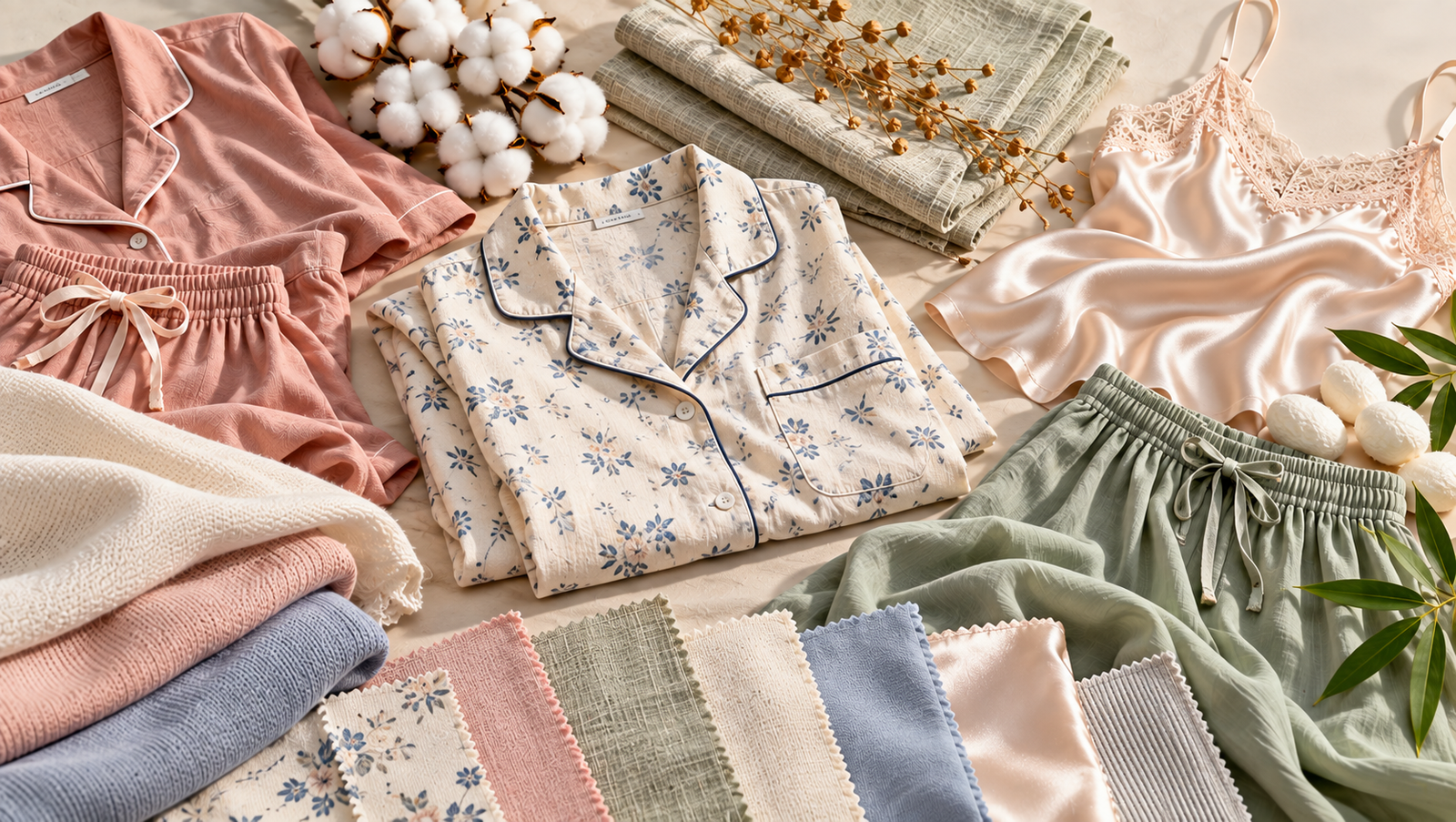
The fabric touching your skin for eight hours can change how your sleepwear feels more than the print, neckline, or waistband ever will.
A lightweight cotton jersey can feel easy and familiar. Linen can feel cool and airy. Modal tends to drape closely and feel smooth. Silk brings a different kind of softness, while flannel adds warmth when the bedroom gets cold.
But choosing sleepwear fabrics isn’t as simple as picking the softest material.
The fiber matters. So does the weave or knit. Fabric weight changes the experience. Finishes can change the surface. Blends can balance strengths and weaknesses. And the same fiber can feel completely different depending on how a manufacturer turns it into fabric.
This guide breaks down those differences so you can choose sleepwear based on how you sleep, where you live, how you care for your clothes, and what you actually want from the garment.
Sleepwear Fabrics at a Glance
| Fabric | Typical feel | Temperature use | Stretch | Care | Best suited to |
|---|---|---|---|---|---|
| Cotton | Soft, familiar, versatile | Year-round | Depends on construction | Easy to moderate | Everyday sleepwear |
| Modal | Smooth, soft, fluid | Mild to warm | Usually good in knits | Moderate | Drapey pajamas and nighties |
| Linen | Airy, textured, crisp | Warm climates | Low | Moderate | Hot-weather sleepwear |
| Silk | Smooth, light, luxurious | Mild to warm | Low unless blended | Delicate | Premium sleepwear |
| Flannel | Soft, brushed, warm | Cold | Depends on construction | Moderate | Winter sleepwear |
| Polyester | Smooth to varied | Depends on construction | Depends on construction | Easy | Durable, easy-care garments |
| Rayon/viscose | Soft, fluid | Mild to warm | Depends on construction | Moderate | Drapey sleepwear |
| Blends | Varies | Varies | Varies | Varies | Balanced performance |
There is no universal “best” fabric.
A warm sleeper needs something different from someone who gets cold at night. Someone who washes sleepwear several times a week may value durability more than someone buying an occasional luxury set.
The best fabric is the one that fits your sleep environment and your habits.
First, Understand the Difference Between Fiber and Fabric
This is where many sleepwear guides become confusing.
A fiber is the raw material used to make yarn or textile material. Cotton, silk, polyester, and linen are examples.
A fabric is the finished textile made by arranging yarns or fibers through a construction such as weaving or knitting.
That distinction explains why two garments made from the same fiber can feel completely different.
For example, cotton can become:
- Lightweight jersey
- Crisp poplin
- Percale
- Waffle knit
- Flannel
- Gauze
- Rib knit
All of those are cotton-based, but they don’t have the same texture, drape, warmth, or stretch.
The same principle applies to synthetic and regenerated fibers.
So when you shop for pajamas, don’t stop at the fiber label.
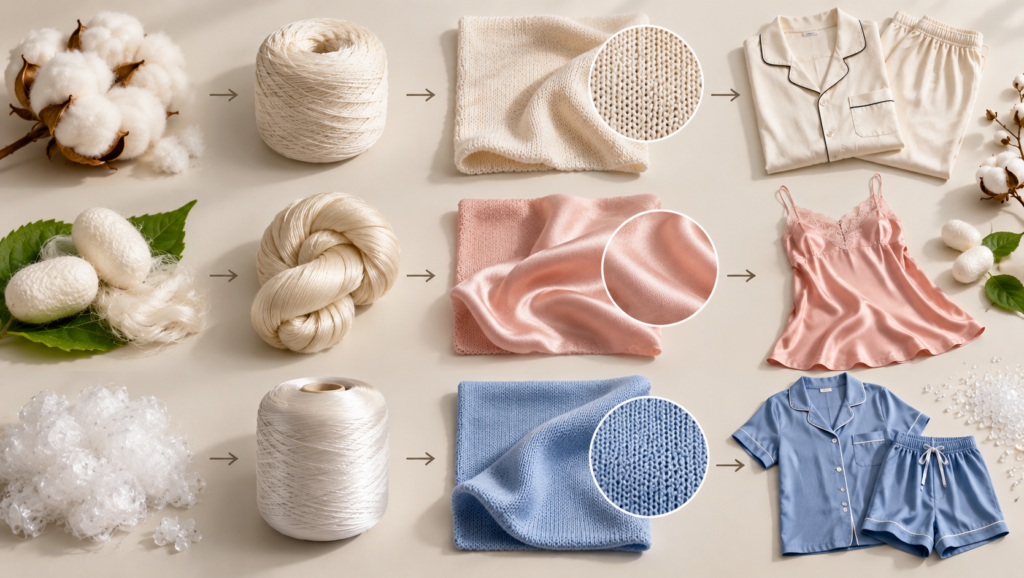
Look at fiber + construction + weight + finish + garment design.
What Makes a Good Sleepwear Fabric?
Before comparing individual materials, look at the properties that actually affect comfort.
1. Breathability
Breathability describes how easily air and heat move through a textile.
A loose, lightweight fabric generally allows more air movement than a dense, heavy construction.
But don’t judge breathability from the fiber name alone.
A lightweight cotton and a thick brushed cotton can behave very differently even though both use cotton.
2. Moisture Handling
Your body releases moisture while you sleep.
A fabric can absorb moisture, move moisture, release moisture, or hold moisture close to the skin depending on its fiber, construction, and finish.
That’s why “breathable” and “moisture-wicking” shouldn’t automatically mean the same thing.
A fabric may allow air movement but still feel damp after absorbing sweat.
3. Fabric Weight
Fabric weight affects how a garment feels.
Manufacturers often express textile weight as GSM, or grams per square meter.
A higher GSM generally means more material by weight, but GSM alone doesn’t tell you whether a fabric will feel warmer, softer, or better.
Construction matters too.
A lightweight brushed fabric can feel warmer than a smooth fabric with a similar weight because the surface traps more air.
4. Surface Feel
Think about what happens when your skin touches the fabric.
Is it:
- Smooth?
- Crisp?
- Brushed?
- Slippery?
- Textured?
- Fuzzy?
- Cool to the touch?
Surface feel becomes especially important for sleepwear because the garment stays against your skin for long periods.
5. Stretch
Stretch changes how sleepwear moves with your body.
Knitted fabrics often provide more natural stretch than woven fabrics. Adding elastane can increase stretch further.
That can make a difference in:
- Pajama pants
- Fitted nightgowns
- Camisoles
- Lounge sets
- Waistbands
- Cuffs
6. Drape
Drape describes how fabric falls instead of holding a rigid shape.
Fluid fabrics such as modal, viscose, and some lightweight silks tend to create a softer, closer drape.
Structured cottons and some woven fabrics hold more shape.
Drape becomes particularly noticeable in loose nightgowns and wide-leg pajama pants.
Cotton Sleepwear
Cotton remains one of the most versatile choices for sleepwear.
And the reason isn’t complicated.
Cotton comes in a huge range of constructions, weights, finishes, and price points. That makes it possible to build everything from lightweight summer nighties to warm winter pajamas from the same underlying fiber.
What cotton feels like
Cotton can feel:
- Soft
- Dry
- Crisp
- Smooth
- Textured
- Brushed
The construction determines much of that experience.
Cotton jersey
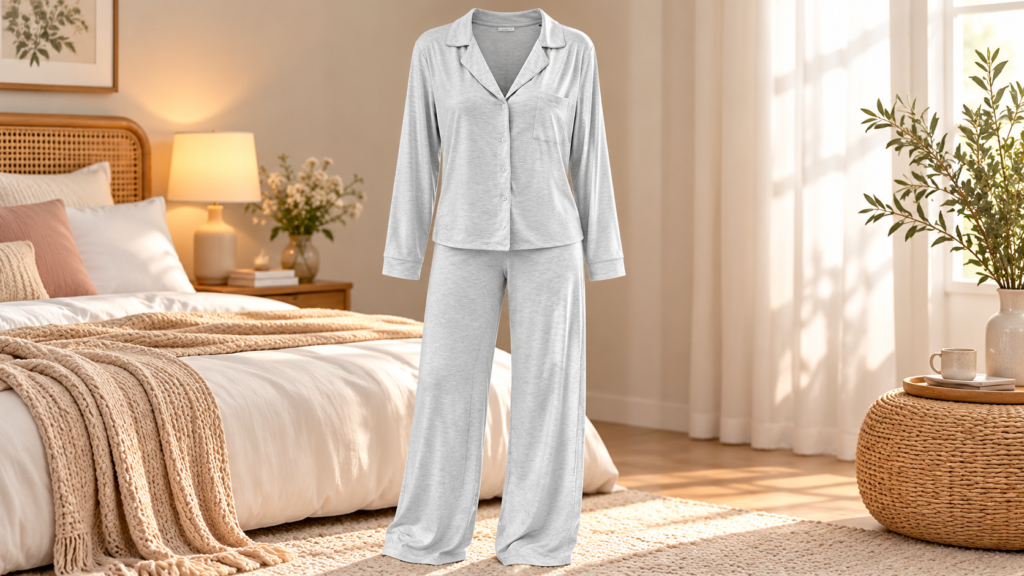
Cotton jersey has a soft, T-shirt-like feel and natural stretch from its knitted construction.
It’s a practical choice for relaxed pajama sets, nightshirts, and casual sleepwear.
Cotton poplin
Poplin creates a more structured, smooth feel.
It works well for button-down pajama sets when you want a crisp appearance rather than a drapey silhouette.
Cotton flannel
Flannel uses a brushed surface that creates a warmer, softer hand.
It makes sense for cold-weather sleepwear.
Cotton gauze
Gauze uses a lightweight, airy construction.
It can work well for warm-weather garments where you want minimal weight and a relaxed texture.
Best for
Everyday wear, versatile wardrobes, people who want easy-care sleepwear, and shoppers who want many construction options.
Watch for
Cotton can shrink depending on the fiber, construction, finishing, and care process. Always follow the garment’s care instructions rather than assuming every cotton garment can tolerate the same washing routine.
Modal Sleepwear
Modal belongs to the regenerated cellulose family and commonly appears in soft knitted sleepwear.
It has become popular because of its smooth hand feel and fluid drape.
Modal works particularly well when you want sleepwear that falls close to the body rather than holding a crisp shape.
What modal feels like
Expect a fabric that often feels:
- Smooth
- Soft
- Fluid
- Lightweight to medium-weight
- Drapey
Modal sleepwear commonly appears in jersey constructions, sometimes with elastane for additional stretch.
Why people choose modal
Modal makes sense when softness and drape sit high on your list.
It’s particularly useful for:
- Relaxed pajama sets
- Nightgowns
- Camisoles
- Lounge pants
- Lightweight sleep tops
But don’t treat “modal” as a guarantee of a particular feel.
The final fabric depends on the blend, knit structure, finishing, and weight.
Best for
Soft, drapey sleepwear and people who prefer a smooth fabric that moves with the body.
Linen Sleepwear
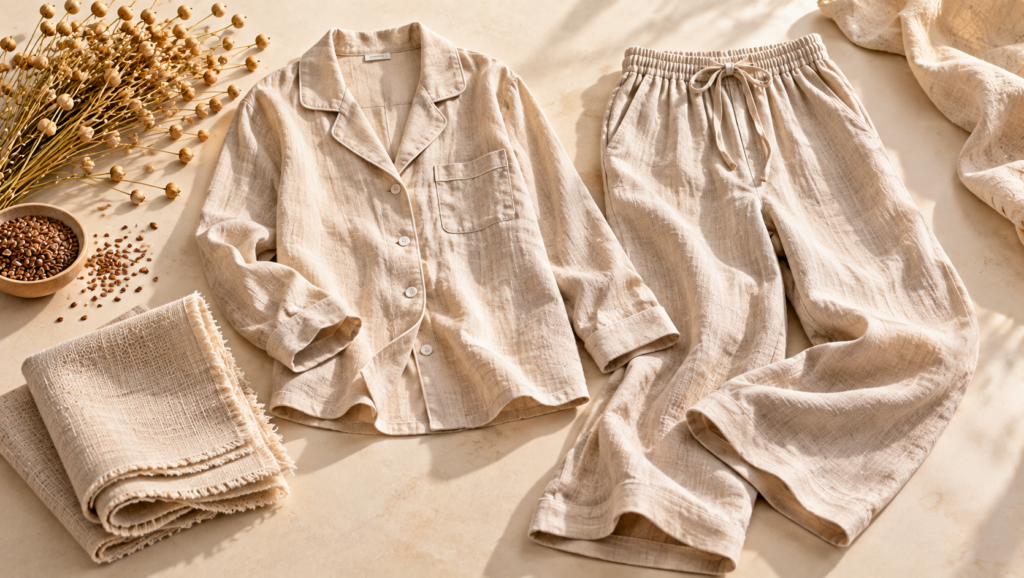
Linen comes from flax and has a distinctive texture that separates it from smoother sleepwear fabrics.
It feels airy and tends to suit warm-weather garments particularly well.
But linen isn’t for everyone.
Some people love its relaxed texture. Others prefer the smoother surface of cotton jersey, modal, or silk.
What linen feels like
Linen can feel:
- Crisp
- Dry
- Textured
- Airy
- Lightweight
It also wrinkles easily.
That’s part of the fabric’s character, not necessarily a sign of poor quality.
Linen for hot weather
Linen makes a strong choice for warm climates because lightweight linen constructions can allow substantial airflow.
It works particularly well in:
- Loose pajama sets
- Relaxed nightgowns
- Wide-leg sleep pants
- Resort-style sleepwear
Best for
Hot climates, relaxed silhouettes, and shoppers who like natural texture.
Watch for
If you want wrinkle-free sleepwear, linen may frustrate you.
If you like a relaxed, lived-in appearance, those same wrinkles may be part of the appeal.
Silk Sleepwear
Silk occupies a different part of the sleepwear spectrum.
It feels smooth, lightweight, and luxurious, but the word “silk” tells you more about the fiber than the finished fabric’s exact behavior.
Silk garments can vary in weave, weight, finish, and construction.
What silk feels like
Silk can feel:
- Smooth
- Lightweight
- Fluid
- Cool against the skin
- Luxurious
It also requires more care than many everyday cotton sleepwear options.
Silk vs satin
These terms often cause confusion.
Silk is a fiber. Satin describes a type of fabric construction or surface effect.
A satin pajama set can use polyester, silk, or another fiber.
So if you’re specifically looking for silk, check the fiber-content label.
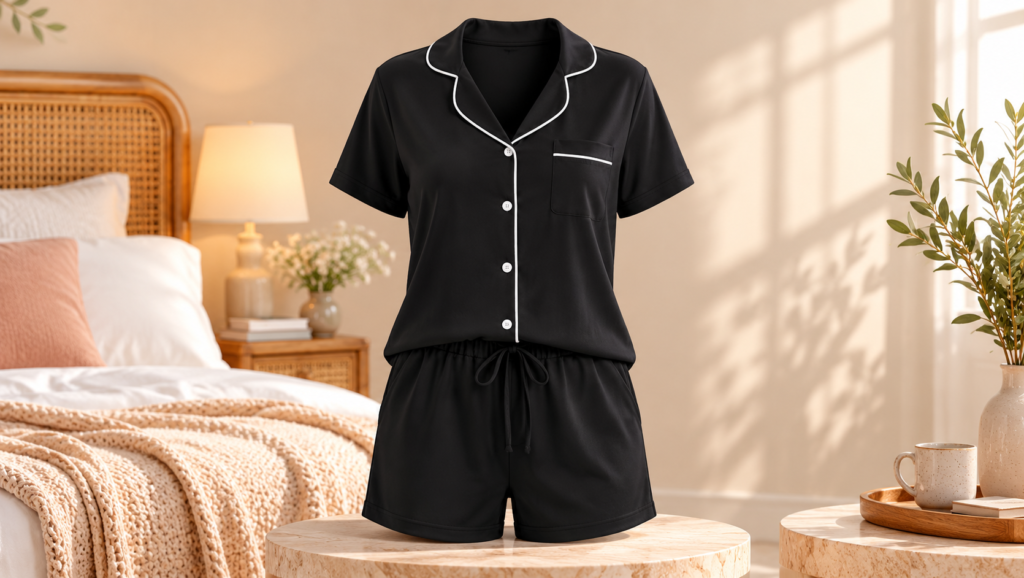
If a product says “silky satin,” don’t assume that means silk.
Best for
Luxury sleepwear, lightweight garments, special-occasion sets, and people who enjoy a smooth surface.
Watch for
Silk can require gentler washing and handling. Follow the garment’s care label instead of applying a generic “silk care” routine to every product.
Flannel Sleepwear
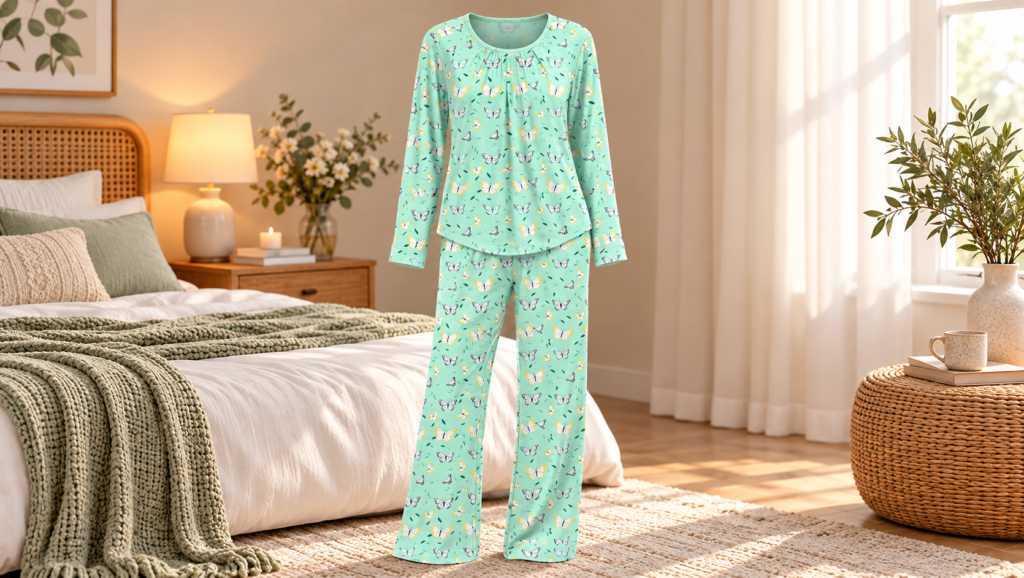
Flannel is a strong cold-weather choice because its brushed surface creates a warmer, softer feel.
Cotton flannel is particularly common in pajamas.
What flannel feels like
Flannel tends to feel:
- Soft
- Brushed
- Cozy
- Warm
- Slightly fuzzy
The brushed surface changes the feel significantly compared with smooth cotton poplin.
Best for
Cold bedrooms, winter pajamas, and sleepers who prefer more coverage and warmth.
Watch for
Flannel can feel too warm in a hot bedroom.
If you already sleep hot, switching from lightweight cotton to heavy brushed flannel can make the problem worse.
Rayon and Viscose Sleepwear
Rayon is a broad category of regenerated cellulose fibers.
Viscose is one type within that family.
These fabrics often create soft, fluid sleepwear with a smooth drape.
But labels can become confusing here, especially when brands use terms such as bamboo, rayon, viscose, or bamboo viscose interchangeably.
Bamboo deserves special attention
Many products marketed as “bamboo fabric” actually use rayon or viscose made from bamboo as the plant source.
The U.S. Federal Trade Commission says textile products made from bamboo through rayon or viscose processing should be labeled as rayon or viscose made from bamboo rather than simply “bamboo.”
The FTC also warns that processed bamboo rayon should not automatically receive claims about retaining the natural antibacterial properties of the bamboo plant.
So when you see:
“Bamboo pajamas”
check the fiber-content information.
You may actually be buying:
“Rayon/viscose made from bamboo.”
That isn’t necessarily a reason to reject the garment. It is simply more accurate information about what you’re buying.
Best for
Soft, fluid sleepwear and shoppers who like a smooth drape.
Watch for
Read the fiber label and care instructions instead of relying on marketing terms.
Polyester Sleepwear
Polyester often gets an unfairly simple reputation.
It isn’t automatically good or bad for sleepwear.
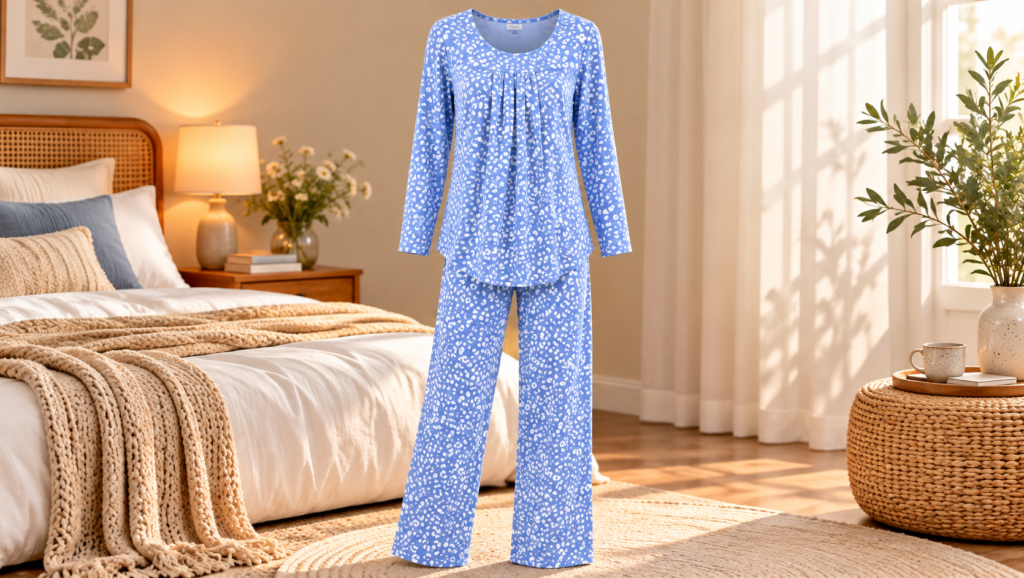
Its performance depends heavily on the fabric construction, weight, finish, and garment design.
Polyester can create:
- Smooth satin-like fabrics
- Brushed fleece
- Lightweight jersey
- Microfiber
- Performance fabrics
That makes the word “polyester” alone insufficient for judging a garment.
Where polyester works well
Polyester offers useful durability and easy-care characteristics.
It can make sense when you want:
- Easy washing
- Shape retention
- Color retention
- Lower maintenance
- Warm brushed fabrics
- Satin-look sleepwear
Where it may not suit you
If you sleep hot, a dense polyester construction may feel less comfortable than a lightweight, more breathable option.
Don’t judge the fiber alone.
Look at the actual fabric.
Blended Sleepwear Fabrics
Many excellent sleepwear garments use blends rather than a single fiber.
A blend can combine different properties.
Examples include:
- Cotton + modal
- Cotton + polyester
- Cotton + elastane
- Rayon + elastane
- Silk + another fiber
- Linen + cotton
The purpose isn’t always to make the fabric “better.”
Sometimes the manufacturer wants:
- More stretch
- Better durability
- Easier care
- Lower cost
- Better shape retention
- A different drape
- A specific texture
Example: Cotton + Elastane
Cotton provides the primary fiber character while elastane adds stretch.
That combination works well in fitted sleepwear and garments that need more flexibility.
Example: Cotton + Polyester
The blend can balance cotton’s familiar hand feel with polyester’s durability and easy-care properties.
Example: Linen + Cotton
The blend can soften some of linen’s crispness while retaining part of its relaxed character.
The important rule
Don’t judge a blend by the first fiber in the name.
Check the percentages.
A garment labeled “cotton blend” could contain very different proportions from another cotton blend.
Fabric Construction Matters as Much as the Fiber
This is one of the easiest details to overlook.
Two cotton garments can feel completely different because one uses jersey and the other uses a woven construction.
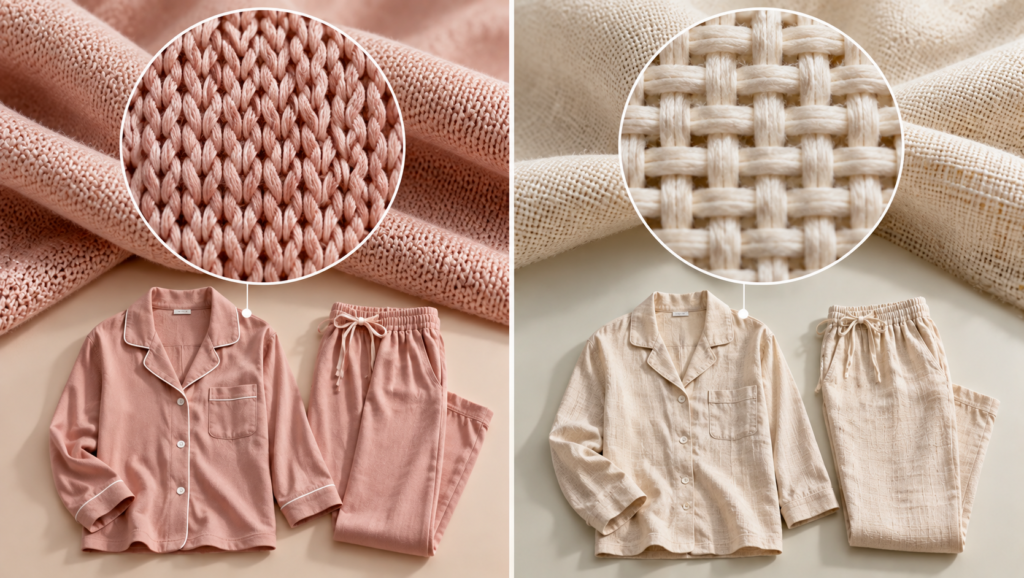
Knits
Knitted fabrics form loops of yarn.
They tend to offer more flexibility and stretch.
Common sleepwear examples include:
- Jersey
- Rib
- Interlock
- Waffle knits
Knits work well for relaxed sleepwear and garments designed to move with the body.
Wovens
Woven fabrics arrange yarns in intersecting directions.
They often create more structure.
Common sleepwear examples include:
- Poplin
- Plain weave
- Satin
- Flannel constructions
- Linen wovens
Woven sleepwear can create a more polished or tailored appearance.
Why this matters
If you compare two garments and one feels softer, stretchier, or more structured, the difference may come from construction rather than fiber alone.
How Fabric Weight Changes Sleepwear
Fabric weight can completely change the experience of the same fiber.
Imagine three cotton garments:
- Lightweight cotton jersey
- Medium-weight cotton jersey
- Heavy brushed cotton
They’re all cotton.
They won’t feel the same at night.
A lightweight construction may work well in a warm bedroom. A heavier brushed fabric can make more sense in winter.
Don’t use GSM as a shortcut for comfort
GSM can help you compare fabrics, especially when you’re shopping for manufacturing or product specifications.
But a higher GSM doesn’t automatically mean “better.”
It simply tells you how much the fabric weighs per square meter.
You still need to consider:
- Construction
- Fiber
- Surface finish
- Garment coverage
- Fit
- Climate
Which Sleepwear Fabric Is Best for Hot Weather?
Start with lightweight construction rather than a single magic fiber.
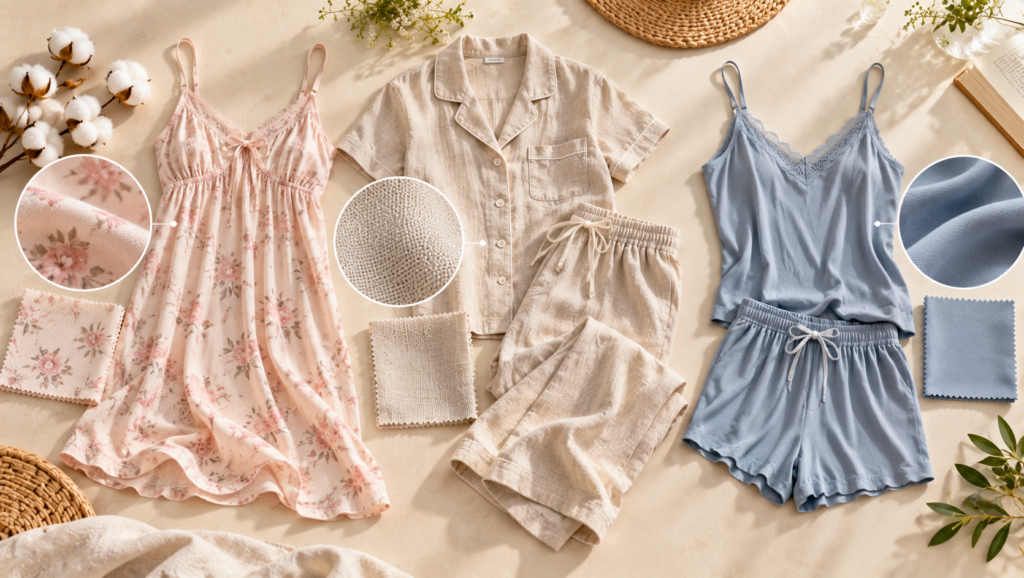
Good options can include:
- Lightweight cotton
- Linen
- Lightweight modal
- Lightweight viscose
- Certain silk constructions
The garment design matters too.
A loose nightgown made from a lightweight fabric can feel very different from a fitted long-sleeve pajama set made from the same fiber.
If you want more help choosing the garment itself, see our guide on nightgown vs pajama set for a direct comparison of coverage, movement, and warmth.
Which Sleepwear Fabric Is Best for Cold Weather?
For cold rooms, look for fabrics and constructions that provide more insulation.
Common choices include:
- Flannel
- Brushed cotton
- Fleece
- Heavier jersey
- Warm blends
Coverage also matters.
A long-sleeve pajama set naturally covers more of the body than a short nightgown.
If you’re deciding between those two garment types, our article on nightgown vs pajama set covers the practical differences in coverage and warmth.
The goal isn’t to choose the thickest fabric available.
It’s to choose enough warmth for your room and bedding without overheating.
What Is the Best Fabric for Hot Sleepers?
There isn’t one universal winner.
A hot sleeper may prefer lightweight linen, cotton, modal, viscose, or silk depending on personal texture preferences and the exact fabric construction.
Start with these characteristics:
- Lightweight construction
- Loose fit
- Lower coverage
- Air-permeable fabric
- Comfortable moisture handling
- Minimal heavy finishing
And pay attention to what happens after you sweat.
A fabric can feel cool when you first put it on and feel completely different after several hours of wear.
What Is the Softest Sleepwear Fabric?
“Softest” depends on what kind of softness you like.
Modal and some viscose fabrics often feel very smooth and fluid.
Silk has a distinctive smooth surface.
Cotton can feel softer as you wash and wear it, especially in comfortable jersey constructions.
Flannel feels soft because of its brushed surface rather than because the underlying fiber must be especially fine.
So instead of asking only:
What’s the softest fabric?
Ask:
What type of surface feels best against my skin?
That question produces a much more useful answer.
What Is the Best Sleepwear Fabric for Sensitive Skin?
Start with the finished garment rather than assuming that one fiber works for everyone.
Look for:
- Soft surfaces
- Smooth seams
- Comfortable construction
- Minimal irritating trims
- Appropriate fit
- Fabrics you personally tolerate well
Certification can also provide useful information, but it doesn’t guarantee that every person will find a garment comfortable.
For example, OEKO-TEX STANDARD 100 indicates that the certified textile has been tested for harmful substances, with requirements that become stricter for products with more intensive skin contact.
That’s useful information about chemical safety testing.
It doesn’t mean the fabric automatically feels softer or suits every sensitive skin type.
How to Choose Sleepwear Fabric for Night Sweats
If you wake up sweaty, don’t look only for the word “breathable.”
Check four things:
1. Weight
Heavy fabrics can hold more warmth.
2. Construction
Dense or brushed constructions can feel warmer than lightweight ones.
3. Fit
Loose garments can allow more air movement than tight-fitting sleepwear.
4. Moisture behavior
A fabric that absorbs moisture can still feel damp against the skin.
Try to think about the entire sleep system rather than the fiber name alone.
Your bedding, room temperature, garment coverage, and fabric all work together.
Sleepwear Fabric for Different Sleep Styles
| Your preference | Fabrics/constructions to explore |
|---|---|
| I sleep hot | Lightweight cotton, linen, modal, viscose, lightweight silk |
| I sleep cold | Flannel, brushed cotton, fleece, heavier jersey |
| I want softness | Modal, smooth viscose, cotton jersey, silk |
| I want a crisp feel | Cotton poplin, lightweight linen |
| I want stretch | Jersey, rib, elastane blends |
| I want luxury | Silk, high-quality satin, fine modal |
| I want easy care | Cotton, polyester blends, washable blends |
| I dislike wrinkles | Smooth cotton blends, modal, polyester blends |
| I like natural texture | Linen, cotton gauze, textured cotton |
| I want a fluid drape | Modal, viscose, silk |
Treat this table as a starting point, not a ranking.
The actual fabric construction can change the result.
Sleepwear Fabric Care: Why the Label Matters
The fabric content tells you what the garment contains.
The care label tells you how the manufacturer expects you to maintain it.
Those are different pieces of information.
A cotton garment may tolerate machine washing, while a silk garment may require more careful handling. A blended fabric may have different requirements because of its other fibers, dyes, trims, elastic, or construction.
In the United States, the FTC’s Care Labeling Rule requires covered textile apparel to provide regular care instructions and requires manufacturers/importers to have a reasonable basis for those instructions.
So don’t create a generic wash routine based only on the fiber name.
Follow the care label on the actual garment.
Simple rule
If the label says:
Machine wash cold
don’t assume that warm or hot washing will produce the same result.
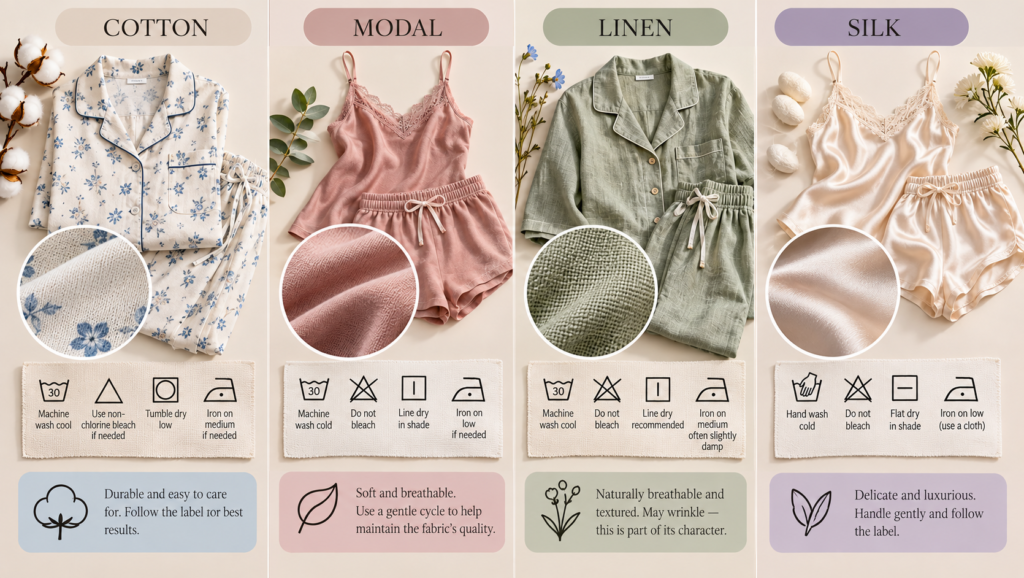
If it says:
Lay flat to dry
don’t treat that as optional.
Good sleepwear can last much longer when you follow the care instructions the manufacturer designed for the finished garment.
Does Organic Mean Better Sleepwear?
Not automatically.
“Organic” describes how a qualifying fiber was produced under the relevant standard. It doesn’t automatically tell you whether the finished garment will feel softer, cooler, warmer, or more durable.
If sustainability or organic sourcing matters to you, look for a meaningful certification rather than relying only on marketing language.
GOTS, for example, covers certified organic fibers as well as environmental and social criteria across textile processing. Current GOTS resources identify Version 8.0 as the standard version.
That makes certification more informative than simply seeing the word “organic” on a product page.
OEKO-TEX vs GOTS: What’s the Difference?
These certifications answer different questions.
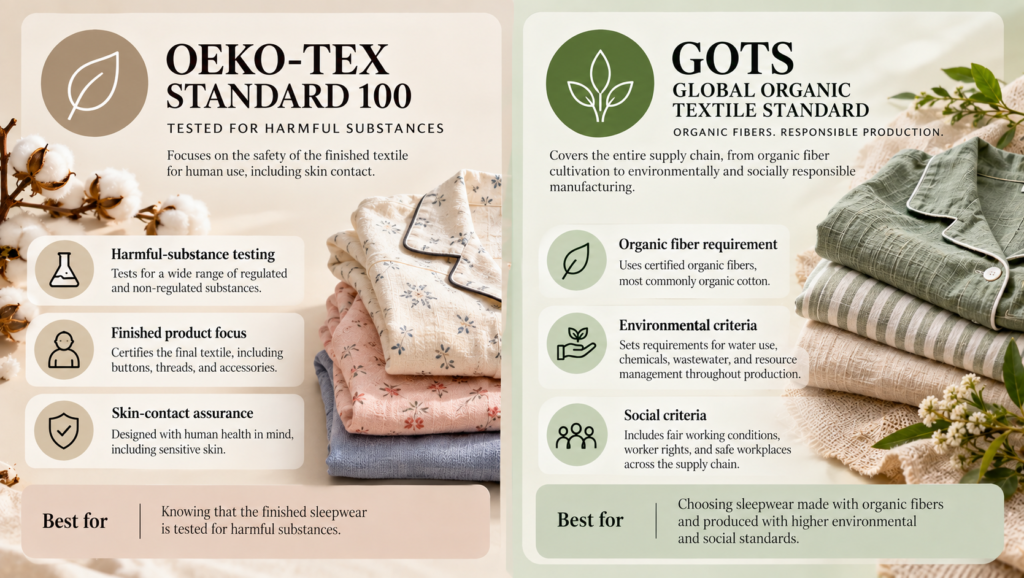
OEKO-TEX STANDARD 100
OEKO-TEX STANDARD 100 focuses on testing textiles for harmful substances. Its criteria become stricter as the product has more direct or intensive skin contact.
GOTS
GOTS covers organic fiber requirements and broader environmental and social criteria through textile processing.
So don’t treat the two labels as interchangeable.
One certification doesn’t replace the other.
Is Bamboo Fabric Actually Bamboo?
Usually, not in the way shoppers imagine.
In the U.S., the FTC states that textiles made from bamboo through rayon or viscose processing should be described as rayon or viscose made from bamboo.
That distinction matters because “bamboo” marketing can make shoppers assume the finished textile retains properties of the original plant.
The FTC specifically says there is no evidence that rayon made from processed bamboo retains the plant’s natural antibacterial properties.
So when shopping for bamboo sleepwear, check the fiber label.
And don’t confuse:
Bamboo plant
with
Rayon/viscose made from bamboo.
Sleepwear Fabrics and Garment Design Work Together
Fabric never works alone.
The same textile can produce very different sleepwear depending on the garment.
Consider a lightweight cotton jersey.
A loose nightgown gives it plenty of room to move.
A fitted pajama top creates more body contact.
A long-sleeve version provides more coverage.
A short camisole exposes more skin.
So if you’re comparing sleepwear, don’t ask only:
“Which fabric is better?”
Ask:
“Which fabric, construction, fit, and coverage work together for how I sleep?”
If you want to understand the garment side of that decision, read our guide to nightgown vs nightie vs nightshirt and our explanation of what a nightie is.
Sleepwear Fabric and Shapewear Are Different Conversations
Fabric choice also changes when you move from sleepwear into intimate garments designed for shaping.
Shapewear often uses stretch-focused constructions and blends to create a close fit.
Compression garments use pressure for specific support or therapeutic purposes depending on the product.
If you’re researching that distinction, see our guide to shapewear vs compression garments.
The same fabric principles still apply:
- Fiber matters.
- Construction matters.
- Stretch matters.
- Fit matters.
- Care matters.
But the garment’s purpose changes how manufacturers balance those properties.
How to Read a Sleepwear Fabric Label
A product page can tell you a lot if you know where to look.
Step 1: Check the fiber content
Look for percentages.
For example:
95% cotton / 5% elastane
tells you much more than simply:
stretch cotton
Step 2: Check the construction if provided
Look for terms such as:
- Jersey
- Rib
- Poplin
- Flannel
- Satin
- Woven
- Knit
Step 3: Check the garment weight or GSM if available
This information appears more often on manufacturer or technical product pages than consumer listings.
Step 4: Check the care instructions
Don’t assume the care routine from the fiber name.
Step 5: Check certifications separately
If the product makes claims about organic production or textile safety, look for the relevant certification and verify what that certification actually covers.
Step 6: Check the garment design
A fabric’s performance changes with:
- Fit
- Sleeve length
- Leg coverage
- Layering
- Seams
- Elastic
- Finishes
A fabric label never tells the entire story.
Common Sleepwear Fabric Mistakes
Choosing the softest fabric without considering warmth
A fabric can feel wonderful in the store and become uncomfortable in a warm bedroom.
Assuming natural means automatically better
Natural fibers offer useful properties, but no fiber automatically wins for every sleeper.
Assuming synthetic means uncomfortable
Synthetic fibers can perform well in certain constructions and garments. The finished fabric matters.
Confusing satin with silk
Satin describes a construction or surface effect. Silk identifies a natural protein fiber.
Treating bamboo as a simple natural-fiber label
Many bamboo textiles use rayon or viscose made from bamboo. Check the actual fiber description.
Ignoring care requirements
A beautiful sleepwear set that you avoid washing because it needs complicated care won’t become a practical favorite.
Choosing based only on the garment’s fiber
Fiber is important.
But fiber + construction + weight + finish + fit tells you much more.
Which Sleepwear Fabric Should You Choose?
Use this as your final filter.
Choose cotton if you want:
- Versatility
- Familiar softness
- Many construction options
- Easy everyday wear
- Broad price and style choices
Choose modal if you want:
- Smoothness
- Fluid drape
- Soft knitted sleepwear
- A close, comfortable feel
Choose linen if you want:
- Airiness
- Natural texture
- Warm-weather sleepwear
- A relaxed appearance
Choose silk if you want:
- A smooth surface
- Lightweight luxury
- Fluid drape
- Special-occasion sleepwear
Choose flannel if you want:
- Warmth
- A brushed surface
- Cold-weather pajamas
- Cozy texture
Choose polyester or blends if you want:
- Easy care
- Durability
- Specific performance or finishes
- Affordable sleepwear options
Choose rayon/viscose if you want:
- Softness
- Fluid drape
- Lightweight sleepwear
But always check the exact fiber description and care instructions.
The Best Sleepwear Fabric Is the One That Fits Your Night
There is no fabric that wins every category.
Cotton can be the dependable everyday option. Linen can shine in warm weather. Flannel can make cold nights more comfortable. Modal and viscose can provide a smooth, fluid feel. Silk can bring a more luxurious experience.
But the fiber name is only the beginning.
The construction, fabric weight, surface, blend, garment design, fit, and care requirements can change how that fiber behaves once you actually wear it.
That’s why shopping for sleepwear fabrics should start with your own night:
Do you sleep hot or cold?
Do you prefer crisp, smooth, textured, or silky fabrics?
Do you need stretch?
How often do you wash your sleepwear?
Do you want easy care or don’t mind delicate fabrics?
Answer those questions first.
Then choose the fabric.
That’s a much more reliable way to build a sleepwear drawer you’ll actually want to wear.
Frequently Asked Questions About Sleepwear Fabrics
What is the best fabric for sleepwear?
There is no universal best fabric. Lightweight cotton, linen, modal, viscose, silk, and other fabrics can work well depending on your temperature, preferred texture, garment design, and care routine.
What is the most breathable fabric for pajamas?
Lightweight linen and lightweight cotton are common choices for warm-weather sleepwear. Modal, viscose, and silk can also work well depending on their construction and garment design.
Is cotton good for sleepwear?
Yes. Cotton offers a wide range of constructions, from lightweight jersey to warm flannel, which makes it one of the most versatile sleepwear fibers.
Is modal good for pajamas?
Modal works well in soft, fluid sleepwear, particularly knitted pajamas and nightgowns. The final feel depends on the modal blend, knit structure, weight, and finish.
Is linen good for sleeping?
Lightweight linen can work well for warm-weather sleepwear because it feels airy and has a distinctive textured surface. Its tendency to wrinkle makes it less suitable for people who prefer a smooth, pressed appearance.
Is silk better than cotton for sleepwear?
Not universally. Silk offers a smooth, lightweight feel, while cotton provides greater versatility and often easier care. Your temperature preference and care routine should guide the choice.
Is satin the same as silk?
No. Silk is a natural protein fiber, while satin describes a fabric construction or surface effect. Satin garments can use silk, polyester, or other fibers.
Is bamboo fabric really bamboo?
Many textiles marketed as bamboo use rayon or viscose made from bamboo as the plant source. The FTC requires accurate labeling of these textiles and does not support unsupported claims that processed bamboo rayon retains the plant’s natural antibacterial properties.
What fabric is best for hot sleepers?
Start with lightweight fabrics and loose garment designs. Lightweight cotton, linen, modal, viscose, and some silk constructions can work well, but individual comfort varies.
What fabric is best for cold sleepers?
Flannel, brushed cotton, fleece, and heavier knitted fabrics can provide more warmth. Choose based on room temperature and how much coverage you prefer.
How do I make sleepwear last longer?
Follow the garment’s care label, avoid unnecessarily harsh washing, and use the recommended drying method. Care instructions should reflect the requirements of the finished garment, not just its primary fiber.
Does GOTS mean a fabric is safer?
GOTS covers organic fibers and environmental and social criteria across textile processing. It is different from OEKO-TEX STANDARD 100, which focuses on testing textiles for harmful substances.
Related Guides | Intimate Garment By Nightie Wear
If you’re comparing fabric with garment style, these guides can help:
Leave a Reply